| Citation: | CHEN Kang-ming, FAN Lin-jie, WU Qing-xiong, LUO Jian-ping. Research on improving the fatigue resistant performance of circular hollow section K-joint by high-strength bolt stop-hole method[J]. Journal of Traffic and Transportation Engineering, 2026, 26(5): 95-110. doi: 10.19818/j.cnki.1671-1637.2026.039

|
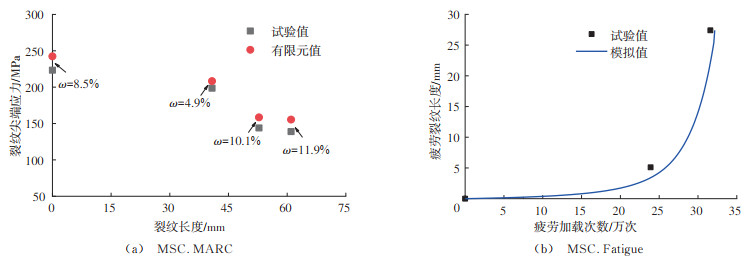
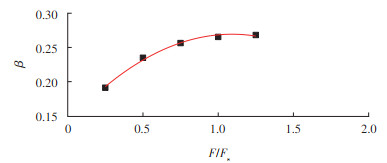
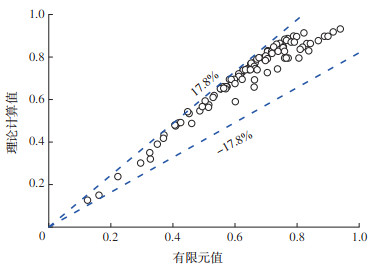
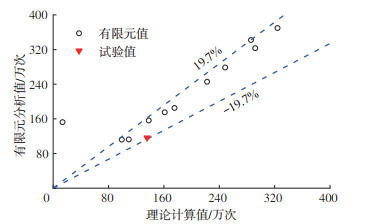
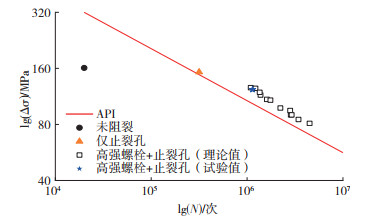
This paper aims to investigate the effect of the high-strength bolt crack arresting method on improving fatigue resistance performance of steel tubular K-joints. Both model tests and combined finite element simulations by adopting MSC.MARC and MSC.Fatigue were carried out, and the hot-spot stress distribution and fatigue evolution process of steel tubular K-joints improved by the high-strength bolt crack arresting method were revealed. Additionally, a calculation method for the stress concentration relief factor and a fatigue life prediction formula for steel tubular K-joints improved by the high-strength bolt crack arresting method were proposed. Finally, the effectiveness of the high-strength bolt crack arresting method in improving the fatigue resistance performance of steel tubular K-joints was evaluated by utilizing S-N curves. The results indicate that the fatigue evolution process of K-joints improved by the drilling crack arresting method and high-strength bolt crack arresting method can be divided into six stages, including crack initiation, crack propagation, drilling crack arresting/high-strength bolt crack arresting, secondary crack initiation, secondary crack propagation, and specimen failure. The combined finite element simulations of steel tubular K-joints improved by the high-strength bolt crack arresting method demonstrate a maximum error of only 11.9%. For steel tubular K-joints improved by the high-strength bolt crack arresting method, the calculation formula for the stress concentration relief factor and fatigue life prediction formula exhibit maximum deviations of 17.8% and 19.7% respectively compared with experimental or finite element simulation results. The fatigue strength of steel tubular K-joints improved by the drilling crack arresting method is 58.9% lower than the API standard recommended value, and thus this method can only be employed as a temporary reinforcement measure. In contrast, the fatigue strength of steel tubular K-joints improved by the high-strength bolt crack arresting method exceeds the API recommended value by 16.0%-34.4%, making this method suitable for long-term reinforcement.

| [1] |
MUSA I A, MASHIRI F R. Stress concentration factor in concrete-filled steel tubular K-joints under balanced axial load[J]. Thin-walled Structures, 2019, 139: 186-195. doi: 10.1016/j.tws.2019.03.003
|
| [2] |
FERROTTO M F, FENU L, XUE J Q, et al. Simplified equivalent finite element modelling of concrete-filled steel tubular K-joints with and without studs[J]. Engineering Structures, 2022, 266: 114634. doi: 10.1016/j.engstruct.2022.114634
|
| [3] |
SHAO Y B, HE S B, YANG D P. Prediction on static strength for CHS tubular K-joints at elevated temperature[J]. KSCE Journal of Civil Engineering, 2017, 21(3): 900-911. doi: 10.1007/s12205-016-0805-x
|
| [4] |
CHEN K M, HUANG H H, WU Q X, et al. Experimental and finite element analysis research on the fatigue performance of CHS K-joints[J]. Engineering Structures, 2019, 197: 109365. doi: 10.1016/j.engstruct.2019.109365
|
| [5] |
CHEN Kang-ming, HUANG Han-hui, WU Qing-xiong, et al. Stress concentration factor calculating method based on circular hollow section K-joint stiffness[J]. Journal of Building Structures, 2020, 41(4): 42-50, 118.
|
| [6] |
WU Qing-xiong, HUANG Han-hui, CHEN Kang-ming, et al. Experimental study on fatigue performance of full-scale circular hollow section K-joints[J]. Journal of Building Structures, 2020, 41(5): 157-167.
|
| [7] |
WU Qing-xiong, LUO Jian-ping, YANG Yi-lun, et al. Fatigue performance experiment of concrete-filled steel tubular-KK joint[J]. Journal of Traffic and Transportation Engineering, 2024, 24 (1): 100-116. doi: 10.19818/j.cnki.1671-1637.2024.01.006
|
| [8] |
SHAO Yong-bo, DU Zhi-fu, LIE Seng-Tjhen. Parametrical equations of stress distribution along weld toe for tubular K-joints under axial loads[J]. Journal of Ship Mechanics, 2011, 15(10): 1134-1144.
|
| [9] |
MORGAN M R, LEE M M K. New parametric equations for stress concentration factors in tubular K-joints under balanced axial loading[J]. International Journal of Fatigue, 1997, 19(4): 309-317. doi: 10.1016/S0142-1123(96)00081-3
|
| [10] |
MORGAN M R, LEE M M K. Parametric equations for distributions of stress concentration factors in tubular K-joints under out-of-plane moment loading[J]. International Journal of Fatigue, 1998, 20(6): 449- 461. doi: 10.1016/S0142-1123(98)00011-5
|
| [11] |
LIU Jun-ping, YANG Qian, LIU Hua-long, et al. Stress concentration characteristics of concrete-filled steel tubular truss-rib K-joint with inner studs[J]. Journal of Traffic and Transportation Engineering, 2024, 24 (6): 106-120. doi: 10.19818/j.cnki.1671-1637.2024.06.007
|
| [12] |
HUANG Han-hui, CHEN Kang-ming, WU Qing-xiong, et al. Study on fatigue cracking of joint in a half-through CFST truss arch rib joint[J]. Engineering Mechanics, 2017, 34 (S1): 167-173.
|
| [13] |
ZHANG Bao-feng, QU Shu-ying, SHAO Yong-bo, et al. Fatigue crack propagation analysis of tubular K-joints Ⅰ: Experimental test[J]. Chinese Journal of Computational Mechanics, 2007, 24(5): 643-647.
|
| [14] |
TANG X W, CAO J, ZHANG J, et al. K-type, inverse K-type and X-type legs stability analysis of jack-up offshore platform[J]. Applied Mechanics and Materials, 2013, 2382(312): 205-209.
|
| [15] |
YIN Yue, LIU Xi-liang. Crack arrest and repair of fatigue crack in steel structure[C]//Tianjin University. 4th National Symposium on Modern Structural Engineering. Beijing: Journal of Industrial Architecture, 2004 : 767-770.
|
| [16] |
ALBRECHT P, LENWARI A. Fatigue strength of repaired prestressed composite beams[J]. Journal of Bridge Engineering, 2008, 13(4): 409-417. doi: 10.1061/(ASCE)1084-0702(2008)13:4(409)
|
| [17] |
COLOMBI P, FAVA G, SONZOGNI L. Effect of initial damage level and patch configuration on the fatigue behaviour of reinforced steel plates[J]. Fatigue & Fracture of Engineering Materials & Structures, 2015, 38(3): 368-378.
|
| [18] |
PARK H C, LEE C H, CHANG K H. Strengthening a damaged steel girder bridge by the replacement repair welding[J]. KSCE Journal of Civil Engineering, 2012, 16(7): 1243-1249. doi: 10.1007/s12205-012-1570-0
|
| [19] |
FU Z Q, JI B H, XIE S H, et al. Crack stop holes in steel bridge decks: Drilling method and effects[J]. Journal of Central South University, 2017, 24(10): 2372-2381. doi: 10.1007/s11771-017-3649-8
|
| [20] |
YAO Y, JI B H, FU Z Q, et al. Optimization of stop-hole parameters for cracks at diaphragm-to-rib weld in steel bridges[J]. Journal of Constructional Steel Research, 2019, 162: 105747-105747. doi: 10.1016/j.jcsr.2019.105747
|
| [21] |
RAZAVI N, AYATOLLAHI M R, SOMMITSCH C, et al. Retardation of fatigue crack growth in high strength steel S690 using a modified stop-hole technique[J]. Engineering Fracture Mechanics, 2017, 169: 226-237. doi: 10.1016/j.engfracmech.2016.11.013
|
| [22] |
FANNI M, FOUDA N, SHABARA M A N, et al. New crack stop hole shape using structural optimizing technique[J]. Ain Shams Engineering Journal, 2015, 6(3): 987-999. doi: 10.1016/j.asej.2015.02.010
|
| [23] |
AYATOLLAHI M R, RAZAVI N, CHAMANI H R. A numerical study on the effect of symmetric crack flank holes on fatigue life extension of a SENT specimen[J]. Fatigue & Fracture of Engineering Materials & Structures, 2014, 37(10): 1153-1164.
|
| [24] |
MIKI C, TOYODA Y, MORI T, et al. Fatigue of large-scale welded girders under simulated highway loadings[J]. Doboku Gakkai Ronbunshu, 1990(422): 165-173.
|
| [25] |
MAKABE C, NAKA K, FERDOUS M S. Method of arresting crack growth for application at a narrow working space[J]. Mechanical Engineering Journal, 2014, 1(6): smm0058. doi: 10.1299/mej.2014smm0058
|
| [26] |
JIANG Xu, LV Zhi-lin, QIANG Xu-hong, et al. Fatigue performance of cracked steel plates repaired by high strength bolt stop-hole method[J]. Journal of Tongji University (Natural Science), 2021, 49(4): 476-486.
|
| [27] |
DAISUKE U, TAKESHI M, NORIKO S. Fatigue strength evaluation of out-of-plane gusset welded joints repaired by bolting-stop-hole method under in-plane bending stresses[J]. Steel Construction Engineering, 2005, 12(48): 55-65.
|
| [28] |
WANG Xian-qiang, YANG Yi, LIU Duo, et al. Experimental research on crack prevention and reinforcement with high-strength bolts for flat plate through cracks [J]. Building Structure, 2022, 52(3): 104-109.
|
| [29] |
HAO Ji-ping, QU Kai, XUE Qiang, et al. Development status and prospects of one-side bolts[J/OL]. Engineering Mechanics, 2025,
|
| [30] |
WANG Guo-jun, LI Wei. MSC Fatigue analysis standard tutorial[M]. Beijing: Posts and Telecommunications Press, 2019.
|
| [31] |
MIAO Xing-lin, HUANG Xian-zhen, DING Peng-fei, et al. Effect of transverse load and preload on the fracture life of bolts[J]. Journal of Northeastern University (Natural Science), 2024, 45(1): 68-75.
|
| [32] |
MOURAD S. Behaviour of blind bolted moment connections for square HSS columns[D]. Hamilton: McMaster University, 1994.
|
| [33] |
BAPTISTA A M, MUZEAU J P, MICHEL D, et al. The use of special blind bolts in the refurbishment of steel structures[J]. Revista Portuguesa de Engenharia de Estruturas, 1999, 10(1): 15-18.
|
| [34] |
YANG Jun-fen, TONG Tian-meng, LI Li-he, et al. Study on the influence of corrosion on fatigue properties of the 5.8-grade lock bolt[J]. Engineering Mechanics, 2025, 42(5): 111-121.
|
| [35] |
GAO X, WANG W, TEH L, et al. A novel slip-critical blind bolt: Experimental studies on shear, tensile and combined tensile-shear resistances[J]. Thin-Walled Structures, 2022, 170: 108630. doi: 10.1016/j.tws.2021.108630
|
Website copyright Journal of Traffic and Transportation Engineering Editorial Department陕ICP备05001904号-1
Address :Editorial Department of Journal of Traffic and Transportation Engineering, Chang'an University, Middle Section of South 2nd Ring Road, Xi'an, China(710064) Tel:029-82334388 Email:jygc@chd.edu.cn
All visit:Today's visit:
Supported by:
Beijing Renhe Information Technology Co. Ltd




 DownLoad: