


Review on research and application technology of marine methanol fuel power system
-
摘要: 为解决现有船舶甲醇燃料应用研究内容分散、缺乏全链条技术体系的系统性分析等问题, 在船舶碳排放控制法规及政策分析的基础上, 综合分析了甲醇燃料特性与制备技术、甲醇燃料存储运输及加注技术、甲醇动力系统设计优化技术、甲醇/柴油双燃料发动机运行特性、甲醇燃料电池技术以及甲醇燃料风险分析与操作安全要求的研究与发展现状, 总结了船舶甲醇燃料动力系统应用技术存在的不足和挑战, 并对船舶甲醇燃料动力系统应用技术的发展趋势进行了总结和展望, 为船舶甲醇燃料动力系统关键技术的研究与应用提供重要参考。分析结果表明: 甲醇燃料的应用是实现船舶脱碳目标的重要选择之一, 然而, 在经济性、安全性及全生命周期碳排放等方面有待开展进一步论证分析; 未来需在绿色甲醇制备、燃料安全存储运输、燃料泄漏与防腐、续航力提升、发动机性能优化与控制等技术方面不断突破, 从而促进航运业的低碳化发展, 满足日益严格的船舶碳排放法规的要求。Abstract: To address the problems of fragmented research contents and the lack of systematic analysis of a full-chain technical system in existing studies on marine methanol fuel application, a comprehensive analysis was conducted based on the analysis of ship carbon emission control regulations and policies. The research and development status of methanol fuel characteristics and production technologies, methanol fuel storage, transportation, and refueling technologies, methanol power system design optimization technologies, methanol/diesel dual-fuel engine operating characteristics, methanol fuel cell technologies, and methanol fuel risk analysis and operation safety requirements was comprehensively analysed. The shortcomings and challenges in the application technologies of marine methanol fuel power systems were summarized. The future development trends of application technologies of marine methanol fuel power systems were summarized and prospected. Important references were provided for the research and application of key technologies of marine methanol fuel power systems. Analysis results indicate that the methanol fuel application is one of the important options for achieving ship decarbonization targets. Further demonstration and analysis are still required in terms of economy, safety, and full life-cycle carbon emissions. In the future, continuous breakthroughs are required in technologies including green methanol production, safe fuel storage and transportation, fuel leakage and corrosion prevention, endurance improvement, and engine performance optimization and control, thus promoting the low-carbon development of the shipping industry and meeting the requirements of increasingly stringent ship carbon emission regulations.
-

表 1 甲醇燃料特性
Table 1. Characteristics of methanol fuel
特性 参数信息 外观与气味 无色透明液体,具有刺激性气味 熔点/℃ 97.7 沸点/℃ 64.7 闪点/℃ 12 热值/(MJ·kg-1) 19.9 能量密度/(MJ·L-1) 15.7 与轻柴油能量密度比值 2.5 燃烧时CO2排放量/ [kg·(kW·h)-1] 0.248 6 溶解性 与水或多种有机溶剂(如乙醇)以任意比例互溶 引燃温度/℃ 464 蒸气压 常温下蒸气压较高,易形成可燃蒸气  下载: 导出CSV
表 2 甲醇/柴油双燃料发动机特性分析
Table 2. Characterization analysis of the methanol/diesel dual-fuel engine
文献 发动机参数或优化方法 结果 [43] 甲醇替代率、初始气缸参数、柴油喷射参数 通过优化可有效降低发动机在低负荷时的排放性能 [44] MSP、EGR、EB MSP增加,NO2排放量先增后降;EGR可降低NO2排放;EB增加导致NOx排放增大 [45] 发动机负荷、进气温度、冷却水温度、甲醇温度 较高的进气温度、甲醇温度和冷却水温度有利于提高效率 [50] 进气道喷射、缸内直喷 采用缸内直喷方式时,可减少85%的NOx排放 [51] 后喷柴油策略 可降低NOx排放12.9% [52] D/M、M/D、M/D/M M/D是最经济、排放最少的模式 [53] D/M、M/D、M/D/M M/D/M模式的热力学性能较佳 [54] SR 可有效提高燃油经济性 [55] ESR、柴油喷射定时 甲醇直喷策略具有更好的燃烧特性,从而可有效降低污染物排放 [56] 预喷甲醇策略 提高了ITE,并显著减少CO2排放量 [57] 优化喷射策略 指示燃油消耗率降低3.95% [58] 双燃料直喷模式 ESR最高可达52.4% [59] DDFS模式 可以提高热效率,降低碳排放 [61] DMDF模式 可以降低NOx和Soot的排放 [62] 喷油器喷孔数 喷孔数为9时,指示热效率较原柴油机提升了2.73% [63] VCR 压缩比为19时热效率最高 [69] 遗传算法 基于该算法进行喷油器安装优化,可有效提高发动机的热力学性能 [70] CFD方法 基于该方法分析发现单侧孔喷嘴可促进甲醇燃烧 [71] RMDF模式 基于该方法可以实现更加清洁、高效的燃烧效果 [72] GWO算法、熵权逼近理想解排序法 基于该方法可降低NOx排放26.22%,指示燃油消耗率降低13.39%
下载: 导出CSV
表 3 甲醇燃料操作安全要求
Table 3. Methanol fuel operational safety requirements
相关文件 主要内容 《船舶应用甲醇/乙醇燃料指南》 涵盖了船舶布置、燃料储存、加注、通风、消防、电气系统、监控以及人员保护等多个方面的安全内容,适用于20 m及以上使用甲醇/乙醇为燃料的钢质或等效金属材料船舶 《船舶甲醇燃料加注作业指南》 加注车和受注船需满足相关标准和法规要求,人员需具备资质并配备防护装备,作业现场需严格管控热工作业和静电风险 《甲醇燃料动力船舶技术与检验暂行规则》 船舶的布置、轮机、电气、控制、监测和安全系统、消防以及甲醇燃料储存等方面的技术规范。明确了规则的目的与适用范围,规定了甲醇燃料动力船舶的检验种类、检验项目以及发证的操作性要求 Guidelines on methanol fueled vessels 涉及船舶设计、燃料储存、加注、通风、消防、电气系统、监控以及人员保护等多方面的安全要求 Methanol safe bandling manual 关于甲醇的物理化学特性、环境和健康安全风险、安全操作规程、应急响应程序等
下载: 导出CSV
表 4 甲醇燃料船舶减排效果
Table 4. Emission reduction effect of methanol-fueled ships
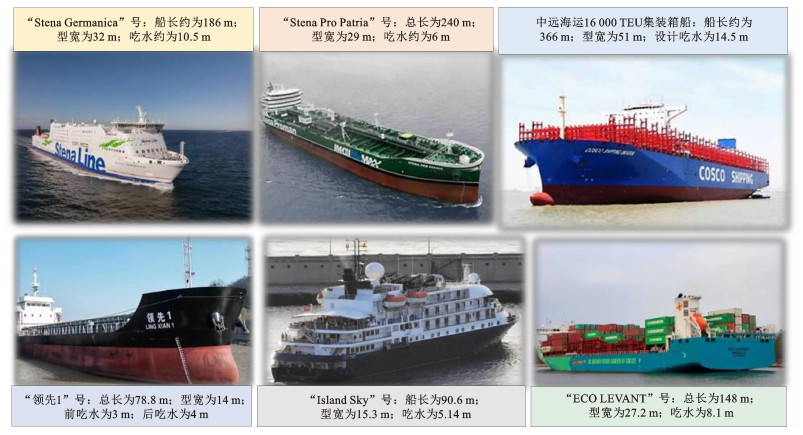
船舶 效果 动力类型 “Stena Germanica”号 减少CO2排放量70% 甲醇/柴油 “Stena Pro Patria”号 分别降低CO2和NOx排放量75%和15% 甲醇/柴油 中远海运集装箱船 降低碳排放约8.9% 甲醇 “领先1”号 降低CO2排放量11.25% 甲醇/柴油 “Island Sky”号 与传统燃料相比,CO2、NOx和SOx排放量分别降低25.70%、38.46%和45.00% 甲醇/柴油 “ECO LEVANT”号 EEDI可以达到5.94 燃料电池混合动力
下载: 导出CSV
-
[1] 袁裕鹏, 王康豫, 尹奇志, 等. 船舶航速优化综述[J]. 交通运输工程学报, 2020, 20(6): 18-34.YUAN Yu-peng, WANG Kang-yu, YIN Qi-zhi, et al. Review on ship speed optimization[J]. Journal of Traffic and Transportation Engineering, 2020, 20(6): 18-34. [2] 严新平, 贺亚鹏, 贺宜, 等. 水路交通技术发展趋势[J]. 交通运输工程学报, 2022, 22(4): 1-9.YAN Xin-ping, HE Ya-peng, HE Yi, et al. Development trends of waterway transportation technology[J]. Journal of Traffic and Transportation Engineering, 2022, 22(4): 1-9. [3] LI Z W, WANG K, LIANG H Z, et al. Marine alternative fuels for shipping decarbonization: Technologies, applications and challenges[J]. Energy Conversion and Management, 2025, 329: 119641. doi: 10.1016/j.enconman.2025.119641 [4] BORTNOWSKA M. Projected reductions in CO2 emissions by using alternative methanol fuel to power a service operation vessel[J]. Energies, 2023, 16(21): 7419. doi: 10.3390/en16217419 [5] 刘迪, 汤玮健, 韩伟, 等. 绿氢时代的船用燃料: 绿色甲醇和绿氨[J]. 化工进展, 2025, 44(12): 6747-6754.LIU Di, TANG Wei-jian, HAN Wei, et al. Marine fuels in the era of green hydrogen: Green methanol and green ammonia[J]. Chemical Industry and Engineering Progress, 2025, 44(12): 6747-6754. [6] PRUSSI M. Applying the international maritime organisation life cycle assessment guidelines to pyrolysis oil-derived blends: A sustainable option for marine fuels[J]. Energies, 2024, 17(21): 5464. doi: 10.3390/en17215464 [7] MA B D, YAO A R, YAO C D, et al. Multiple combustion modes existing in the engine operating in diesel methanol dual fuel[J]. Energy, 2021, 234: 121285. doi: 10.1016/j.energy.2021.121285 [8] ZHOU D Z, YANG W M, AN H, et al. A numerical study on RCCI engine fueled by biodiesel/methanol[J]. Energy Conversion and Management, 2015, 89: 798-807. doi: 10.1016/j.enconman.2014.10.054 [9] 冯是全, 胡以怀, 金浩. 甲醇柴油双燃料发动机的燃烧特性分析[J]. 环境工程, 2016, 34(增1): 593-596.FENG Shi-quan, HU Yi-huai, JIN Hao. Analysis of combustion characteristics of methanol and diesel dual fuel engine[J]. Environmental Engineering, 2016, 34(S1): 593-596. [10] YIN Y X, QI H Y, SU X, et al. Investigation of fuel composition and efficiency of solid oxide fuel cell with different methanol pretreating technologies[J]. International Journal of Green Energy, 2022, 19(8): 827-835. doi: 10.1080/15435075.2021.1964512 [11] SIMON ARAYA S, LISO V, CUI X T, et al. A review of the methanol economy: The fuel cell route[J]. Energies, 2020, 13(3): 596. doi: 10.3390/en13030596 [12] WU Y J, WANG J, HUANG G, et al. Phosphotungstic acid modification boosting the cathode methanol tolerance for high-temperature direct methanol fuel cells[J]. Journal of Power Sources, 2022, 541: 231643. doi: 10.1016/j.jpowsour.2022.231643 [13] MCKINLAY C J, TURNOCK S R, HUDSON D A. Route to zero emission shipping: Hydrogen, ammonia or methanol?[J]. International Journal of Hydrogen Energy, 2021, 46(55): 28282-28297. doi: 10.1016/j.ijhydene.2021.06.066 [14] 宣熔, 牛梦达, 李品芳, 等. 掺烧甲醇对船舶柴油机性能的影响[J]. 舰船科学技术, 2020, 42(21): 101-104, 109.XUAN Rong, NIU Meng-da, LI Pin-fang, et al. Research on the effect of blending methanol on marine diesel engine performance[J]. Ship Science and Technology, 2020, 42(21): 101-104, 109. [15] 朱杰. 甲醇作为船舶替代燃料的应用分析[J]. 船海工程, 2023, 52(增1): 109-113.ZHU Jie. Application analysis of methanol as marine alternative fuel[J]. Ship & Ocean Engineering, 2023, 52(S1): 109-113. [16] 包甜甜, 连峰, 杨忠振. 航运管理研究综述[J]. 交通运输工程学报, 2020, 20(4): 55-69. doi: 10.19818/j.cnki.1671-1637.2020.04.004BAO Tian-tian, LIAN Feng, YANG Zhong-zhen. Research review of shipping management[J]. Journal of Traffic and Transportation Engineering, 2020, 20(4): 55-69. doi: 10.19818/j.cnki.1671-1637.2020.04.004 [17] Klynveld Peat Marwick Goerdeler. The pathway to green shipping. Amsterdam: Klynveld Peat Marwick Goerdeler, 2021. [18] European Union. EU emissions trading system. Luxembourg: European Union, 2023. [19] European Union. Fuel EU maritime. Luxembourg: European Union, 2023. [20] 赵仲秋, 郝金凤, 强兆新, 等. 基于双碳目标和IMO温室气体减排战略的船队减碳路线研究[J]. 中国航海, 2025, 48(1): 174-179, 189.ZHAO Zhong-qiu, HAO Jin-feng, QIANG Zhao-xin, et al. Study of carbon reduction routes for fleets based on dual carbon targets and lMO GHG reduction strategies[J]. Navigation of China, 2025, 48(1): 174-179, 189. [21] ZAHID U, KHALAFALLA S S, ALIBRAHIM H A, et al. Techno-economic evaluation of simultaneous methanol and hydrogen production via autothermal reforming of natural gas[J]. Energy Conversion and Management, 2023, 296: 117681. doi: 10.1016/j.enconman.2023.117681 [22] SALAHUDEEN N, RASHEED A A, BABALOLA A, et al. Review on technologies for conversion of natural gas to methanol[J]. Journal of Natural Gas Science and Engineering, 2022, 108: 104845. doi: 10.1016/j.jngse.2022.104845 [23] OSTADI M, BROMBERG L, ZANG G Y, et al. Flexible and synergistic methanol production via biomass gasification and natural gas reforming[J]. Cleaner Chemical Engineering, 2024, 10: 100120. doi: 10.1016/j.clce.2024.100120 [24] SOLIS-JACOME A, RAMÍREZ-MÁRQUEZ C, MORALES-CABRERA M A, et al. Methanol production from residual streams of natural gas sweetening for achieving the sustainable development goals[J]. Chemical Engineering and Processing—Process Intensification, 2024, 199: 109746. doi: 10.1016/j.cep.2024.109746 [25] BLUMBERG T, LEE Y D, MOROSUK T, et al. Exergoenvironmental analysis of methanol production by steam reforming and autothermal reforming of natural gas[J]. Energy, 2019, 181: 1273-1284. doi: 10.1016/j.energy.2019.05.171 [26] JO S J, KANG T H, SHIN B J, et al. Internal carbon loop strategy for methanol production from natural gas: Multi-objective optimization and process evaluation[J]. Journal of Cleaner Production, 2023, 418: 138140. doi: 10.1016/j.jclepro.2023.138140 [27] BASSANI A, BOZZANO G, PIROLA C, et al. Low impact methanol production from sulfur rich coal gasification[J]. Energy Procedia, 2017, 105: 4519-4524. doi: 10.1016/j.egypro.2017.03.970 [28] INAC S, MIDILLI A. On geothermal and wind energy integrated methanol production by using green hydrogen[J]. Energy, 2025, 318: 134712. doi: 10.1016/j.energy.2025.134712 [29] WANG T, ZHOU T, LI C R, et al. Biogas-to-methanol: A new green methanol production process based on anaerobic digestion of biomass[J]. Energy Conversion and Management, 2024, 321: 119065. doi: 10.1016/j.enconman.2024.119065 [30] WISSNER N, HEALY S, CAMES M, et al. Methanol as a marine fuel. Berlin: Institute for Applied Ecology, 2023. [31] 王中华, 彭诚洋, 陈浩, 等. 甲醇燃料船总体布置及燃料舱结构合规设计[J]. 船舶工程, 2024, 46(12): 30-37.WANG Zhong-hua, PENG Cheng-yang, CHEN Hao, et al. Regulations compliance design of general arrangement and fuel tank structures for methanol fueled ships[J]. Ship Engineering, 2024, 46(12): 30-37. [32] Methanol Institute. Marine methanol future-proof shipping fuel. Washington DC: Methanol Institute, 2023. [33] American Bureau of Shipping. Methanol bunkering: Technical and operational advisory. Houston: American Bureau of Shipping, 2024. [34] 姜季江, 王远, 施亮亮. 氨和甲醇新能源在大型集装箱船上的应用[J]. 船舶工程, 2024, 46(7): 74-80.JIANG Ji-jiang, WANG Yuan, SHI Liang-liang. New energy applications of ammonia and methanol on large container vessels[J]. Ship Engineering, 2024, 46(7): 74-80. [35] LIU H, YANG Y J, ZHOU Z J, et al. Numerical investigation on the efficiency improvement and knock mitigation through combustion chamber optimization in a heavy-duty spark-ignition methanol engine with EGR[J]. Applied Thermal Engineering, 2025, 264: 125469. doi: 10.1016/j.applthermaleng.2025.125469 [36] KIOURANAKIS K I, DE VOS P, ZOUMPOURLOS K, et al. Methanol for heavy-duty internal combustion engines: Review of experimental studies and combustion strategies[J]. Renewable and Sustainable Energy Reviews, 2025, 214: 115529. doi: 10.1016/j.rser.2025.115529 [37] ZHEN X D, WANG Y. An overview of methanol as an internal combustion engine fuel[J]. Renewable and Sustainable Energy Reviews, 2015, 52: 477-493. doi: 10.1016/j.rser.2015.07.083 [38] DOU Z C, YAO C D, WEI H Y, et al. Experimental study of the effect of engine parameters on ultrafine particle in diesel/methanol dual fuel engine[J]. Fuel, 2017, 192: 45-52. doi: 10.1016/j.fuel.2016.12.006 [39] SAXENA M R, MAURYA R K, MISHRA P. Assessment of performance, combustion and emissions characteristics of methanol-diesel dual-fuel compression ignition engine: A review[J]. Journal of Traffic and Transportation Engineering: English Edition, 2021, 8(5): 638-680. doi: 10.1016/j.jtte.2021.02.003 [40] LI C J, WANG Z X, LIU H, et al. Integrated analysis and performance optimization of fuel cell engine cogeneration system with methanol for marine application[J]. Renewable and Sustainable Energy Reviews, 2024, 199: 114564. doi: 10.1016/j.rser.2024.114564 [41] LIU H F, MA G X, MA N F, et al. Effects of charge concentration and reactivity stratification on combustion and emission characteristics of a PFI-DI dual injection engine under low load condition[J]. Fuel, 2018, 231: 26-36. doi: 10.1016/j.fuel.2018.05.027 [42] PAN W, YAO C D, HAN G P, et al. The impact of intake air temperature on performance and exhaust emissions of a diesel methanol dual fuel engine[J]. Fuel, 2015, 162: 101-110. doi: 10.1016/j.fuel.2015.08.073 [43] YANG D, WEI S M, MA Y J, et al. Influence of critical parameters on combustion and emission characteristics of methanol/diesel dual fuel compression combustion engine[J]. Fuel, 2024, 368: 131647. doi: 10.1016/j.fuel.2024.131647 [44] LU H, YAO A R, YAO C D, et al. An investigation on the characteristics of and influence factors for NO2 formation in diesel/methanol dual fuel engine[J]. Fuel, 2019, 235: 617-626. doi: 10.1016/j.fuel.2018.08.061 [45] MA B D, YAO A R, YAO C D, et al. Exergy loss analysis on diesel methanol dual fuel engine under different operating parameters[J]. Applied Energy, 2020, 261: 114483. doi: 10.1016/j.apenergy.2019.114483 [46] TIAN Z, WANG Y, ZHEN X D, et al. The effect of methanol production and application in internal combustion engines on emissions in the context of carbon neutrality: A review[J]. Fuel, 2022, 320: 123902. doi: 10.1016/j.fuel.2022.123902 [47] RAO X, YUAN C Q, GUO Z W, et al. Methanol as an alternative fuel for marine engines: A comprehensive review of current state, opportunities, and challenges[J]. Renewable Energy, 2025, 252: 123562. doi: 10.1016/j.renene.2025.123562 [48] TAO W H, SUN T, GUO W J, et al. The effect of diesel pilot injection strategy on combustion and emission characteristic of diesel/methanol dual fuel engine[J]. Fuel, 2022, 324: 124653. doi: 10.1016/j.fuel.2022.124653 [49] YU J, ZHOU F, FU J Q, et al. Research on the influence of injection strategies on the in-cylinder combustion process and emissions of methanol[J]. Biomass and Bioenergy, 2024, 188: 107340. doi: 10.1016/j.biombioe.2024.107340 [50] KARVOUNIS P, THEOTOKATOS G, PATIL C, et al. Parametric investigation of diesel-methanol dual fuel marine engines with port and direct injection[J]. Fuel, 2025, 381: 133441. doi: 10.1016/j.fuel.2024.133441 [51] WU T Y, YAO A R, YAO C D, et al. Effect of diesel late-injection on combustion and emissions characteristics of diesel/methanol dual fuel engine[J]. Fuel, 2018, 233: 317-327. doi: 10.1016/j.fuel.2018.06.063 [52] LI Z Y, WANG Y, GENG H M, et al. Investigation of injection strategy for a diesel engine with directly injected methanol and pilot diesel at medium load[J]. Fuel, 2020, 266: 116958. doi: 10.1016/j.fuel.2019.116958 [53] LI Z Y, WANG Y, YIN Z B, et al. Effect of injection strategy on a diesel/methanol dual-fuel direct-injection engine[J]. Applied Thermal Engineering, 2021, 189: 116691. doi: 10.1016/j.applthermaleng.2021.116691 [54] LI Z Y, WANG Y, WANG Y J, et al. Effects of fuel injection timings and methanol split ratio in M/D/M strategy on a diesel/methanol dual-fuel direct injection engine[J]. Fuel, 2022, 325: 124970. doi: 10.1016/j.fuel.2022.124970 [55] YIN X J, XU L L, DUAN H, et al. In-depth comparison of methanol port and direct injection strategies in a methanol/diesel dual fuel engine[J]. Fuel Processing Technology, 2023, 241: 107607. doi: 10.1016/j.fuproc.2022.107607 [56] YU Y, WEN H B. Investigation on efficient and clean combustion pre-injection strategy of a diesel/methanol dual direct-injection marine engine under full load[J]. Case Studies in Thermal Engineering, 2024, 59: 104472. doi: 10.1016/j.csite.2024.104472 [57] SUN W C, JIANG M Q, GUO L, et al. Numerical study of injection strategies for marine methanol/diesel direct dual fuel stratification engine[J]. Journal of Cleaner Production, 2023, 421: 138505. doi: 10.1016/j.jclepro.2023.138505 [58] YIN X J, LI W, DUAN H, et al. A comparative study on operating range and combustion characteristics of methanol/diesel dual direct injection engine with different methanol injection timings[J]. Fuel, 2023, 334: 126646. doi: 10.1016/j.fuel.2022.126646 [59] LI Y P, JIA M, XU L L, et al. Multiple-objective optimization of methanol/diesel dual-fuel engine at low loads: A comparison of reactivity controlled compression ignition (RCCI) and direct dual fuel stratification (DDFS) strategies[J]. Fuel, 2020, 262: 116673. doi: 10.1016/j.fuel.2019.116673 [60] MA B D, YAO A R, YAO C D, et al. Experimental study on energy balance of different parameters in diesel methanol dual fuel engine[J]. Applied Thermal Engineering, 2019, 159: 113954. doi: 10.1016/j.applthermaleng.2019.113954 [61] WANG B, YAO A R, CHEN C, et al. Strategy of improving fuel consumption and reducing emission at low load in a diesel methanol dual fuel engine[J]. Fuel, 2019, 254: 115660. doi: 10.1016/j.fuel.2019.115660 [62] 吴德杨, 温华兵, 徐昌春, 等. 船用微引燃甲醇发动机喷油器参数对燃烧和排放特性的影响[J]. 中国舰船研究, 2024, 19(4): 131-138.WU De-yang, WEN Hua-bing, XU Chang-chun, et al. Effects of injector parameters on combustion and emission characteristics of marine micro-ignition methanol engine[J]. Chinese Journal of Ship Research, 2024, 19(4): 131-138. [63] KARVOUNIS P, THEOTOKATOS G. Performance improvement and emissions reduction of methanol fuelled marine dual-fuel engine with variable compression ratio[J]. Fuel Processing Technology, 2025, 272: 108208. doi: 10.1016/j.fuproc.2025.108208 [64] CHEN Z F, YAO C D, YAO A R, et al. The impact of methanol injecting position on cylinder-to-cylinder variation in a diesel methanol dual fuel engine[J]. Fuel, 2017, 191: 150-163. doi: 10.1016/j.fuel.2016.11.072 [65] XU Z, JIA M, LI Y P, et al. Computational optimization of fuel supply, syngas composition, and intake conditions for a syngas/diesel RCCI engine[J]. Fuel, 2018, 234: 120-134. doi: 10.1016/j.fuel.2018.07.003 [66] XU G F, GARCÍA A, JIA M, et al. Computational optimization of the piston bowl geometry for the different combustion regimes of the dual-mode dual-fuel (DMDF) concept through an improved genetic algorithm[J]. Energy Conversion and Management, 2021, 246: 114658. doi: 10.1016/j.enconman.2021.114658 [67] JALILIANTABAR F, GHOBADIAN B, NAJAFI G, et al. Multi-objective NSGA-Ⅱ optimization of a compression ignition engine parameters using biodiesel fuel and exhaust gas recirculation[J]. Energy, 2019, 187: 115970. doi: 10.1016/j.energy.2019.115970 [68] SHIRVANI S, SHIRVANI S, SHAMEKHI A H, et al. Meeting EURO6 emission regulations by multi-objective optimization of the injection strategy of two direct injectors in a DDFS engine[J]. Energy, 2021, 229: 120737. doi: 10.1016/j.energy.2021.120737 [69] LI Y P, CAI Y K, JIA M, et al. A full-parameter computational optimization of both injection parameters and injector layouts for a methanol/diesel dual-fuel direct injection compression ignition engine[J]. Fuel, 2024, 369: 131733. doi: 10.1016/j.fuel.2024.131733 [70] YANG Y, LONG W Q, DONG P B, et al. Performance of large-bore methanol/diesel dual direct injection engine applying asymmetrical diesel nozzle strategies[J]. Applied Thermal Engineering, 2024, 244: 122674. doi: 10.1016/j.applthermaleng.2024.122674 [71] CUNG K D, WALLACE J, KALASKAR V, et al. Experimental study on engine and emissions performance of renewable diesel methanol dual fuel (RMDF) combustion[J]. Fuel, 2024, 357: 129664. doi: 10.1016/j.fuel.2023.129664 [72] WEI F, ZHANG Z H, WEI W W, et al. Multi-objective optimization of the performance for a marine methanol-diesel dual-fuel engine[J]. Fuel, 2024, 368: 131556. doi: 10.1016/j.fuel.2024.131556 [73] SEYAM S, DINCER I, AGELIN-CHAAB M. Optimization and comparative evaluation of novel marine engines integrated with fuel cells using sustainable fuel choices[J]. Energy, 2024, 301: 131629. doi: 10.1016/j.energy.2024.131629 [74] VAN VELDHUIZEN B N, VAN BIERT L, AMLADI A, et al. The effects of fuel type and cathode off-gas recirculation on combined heat and power generation of marine SOFC systems[J]. Energy Conversion and Management, 2023, 276: 116498. doi: 10.1016/j.enconman.2022.116498 [75] LI C J, WANG Z X, LIU H, et al. 4E analysis of a novel proton exchange membrane fuel cell/engine based cogeneration system with methanol fuel for ship application[J]. Energy, 2023, 282: 128741. doi: 10.1016/j.energy.2023.128741 [76] DUONG P A, RYU B, JUNG J, et al. Design, modelling, and thermodynamic analysis of a novel marine power system based on methanol solid oxide fuel cells, integrated proton exchange membrane fuel cells, and combined heat and power production[J]. Sustainability, 2022, 14(19): 12496. doi: 10.3390/su141912496 [77] LI C J, WANG Z X, LIU H, et al. Energy and configuration management strategy for solid oxide fuel cell/engine/battery hybrid power system with methanol on marine: A case study[J]. Energy Conversion and Management, 2024, 307: 118355. doi: 10.1016/j.enconman.2024.118355 [78] CHEN M, WANG M, YANG Z Y, et al. Long-term degradation behaviors research on a direct methanol fuel cell with more than 3 000 h lifetime[J]. Electrochimica Acta, 2018, 282: 702-710. doi: 10.1016/j.electacta.2018.06.116 [79] LIU J G, ZHOU Z H, ZHAO X S, et al. Studies on performance degradation of a direct methanol fuel cell (DMFC) in life test[J]. Physical Chemistry Chemical Physics, 2004, 6(1): 134-137. doi: 10.1039/b313478d [80] WANG Z B, SHAO Y Y, ZUO P J, et al. Durability studies of unsupported Pt cathodic catalyst with working time of direct methanol fuel cells[J]. Journal of Power Sources, 2008, 185(2): 1066-1072. doi: 10.1016/j.jpowsour.2008.08.045 [81] MVLLER M, KIMIAIE N, GLVSEN A. Direct methanol fuel cell systems for backup power—Influence of the standby procedure on the lifetime[J]. International Journal of Hydrogen Energy, 2014, 39(36): 21739-21745. doi: 10.1016/j.ijhydene.2014.08.132 [82] WANG S S. Risk analysis of ship methanol fuel system based on fuzzy Bayesian network model based on bow-tie diagram//ACM. Proceedings of the 2024 3rd International Symposium on Intelligent Unmanned Systems and Artificial Intelligence. New York: ACM, 2024: 327-378. [83] ELLIS J, TANNEBERGER K. Study on the use of ethyl and methyl alcohol as alternative fuels in shipping. Athens: European Maritime Safety Agency, 2015. [84] XING H, STUART C, SPENCE S, et al. Alternative fuel options for low carbon maritime transportation: Pathways to 2050[J]. Journal of Cleaner Production, 2021, 297: 126651. doi: 10.1016/j.jclepro.2021.126651 [85] ZHOU T Q, WU C Z, ZHANG J Y, et al. Incorporating CREAM and MCS into fault tree analysis of LNG carrier spill accidents[J]. Safety Science, 2017, 96: 183-191. doi: 10.1016/j.ssci.2017.03.015 [86] International Maritime Organization. Interim guidelines for the safety of ships using methyl/ethyl alcohol as fuel. London: International Maritime Organization, 2020. [87] SHI J, ZHU Y Q, FENG Y M, et al. A prompt decarbonization pathway for shipping: Green hydrogen, ammonia, and methanol production and utilization in marine engines[J]. Atmosphere, 2023, 14(3): 584. doi: 10.3390/atmos14030584 [88] Marine Fuels & Marine Engine Users. Methanol superstorage solution revolutionizes maritime fuel storage. Houston: Marine Fuels & Marine Engine Users, 2024. [89] Marine Safety Forum. The carriage of methanol in bulk onboard offshore vessels. London: Marine Safety Forum, 2020. [90] ANKATHI S, LU Z F, ZAIMES G G, et al. Greenhouse gas emissions from the global transportation of crude oil: Current status and mitigation potential[J]. Journal of Industrial Ecology, 2022, 26(6): 2045-2056. doi: 10.1111/jiec.13262 [91] LIU L, WU Y, WANG Y, et al. Exploration of environmentally friendly marine power technology-ammonia/diesel stratified injection[J]. Journal of Cleaner Production, 2022, 380: 135014. doi: 10.1016/j.jclepro.2022.135014 [92] AMMAR N R. An environmental and economic analysis of methanol fuel for a cellular container ship[J]. Transportation Research Part D: Transport and Environment, 2019, 69: 66-76. doi: 10.1016/j.trd.2019.02.001 [93] MA Y, WANG Z, LIU H, et al. Efficient and sustainable power propulsion for all-electric ships: An integrated methanol-fueled SOFC-sCO2 system[J]. Renewable Energy, 2024, 230: 120822. doi: 10.1016/j.renene.2024.120822 [94] 李腾飞, 葛秀江, 薛琪. 甲醇燃料船舶发展及前景分析[J]. 广船科技, 2023, 43(3): 92-96.LI Teng-fei, GE Xiu-jiang, XUE Qi. Analysis on the development and prospect of methanol-fueled Ships[J]. Gsi Shipbuilding Technology, 2023, 43(3): 92-96. [95] BAYRAKTAR M, YUKSEL O, PAMIK M. An evaluation of methanol engine utilization regarding economic and upcoming regulatory requirements for a container ship[J]. Sustainable Production and Consumption, 2023, 39: 345-356. doi: 10.1016/j.spc.2023.05.029 [96] BLUMBERG T, TSATSARONIS G, MOROSUK T. On the economics of methanol production from natural gas[J]. Fuel, 2019, 256: 115824. doi: 10.1016/j.fuel.2019.115824 -

计量
- 文章访问数: 28
- HTML全文浏览量: 9
- PDF下载量: 5
- 被引次数: 0
