| Citation: | XU Jun, ZHANG Zhi-le, LIN Zhi-ping. Action effect of corrosion distribution on bearing capacity of stayed cables[J]. Journal of Traffic and Transportation Engineering, 2024, 24(1): 232-244. doi: 10.19818/j.cnki.1671-1637.2024.01.015

|
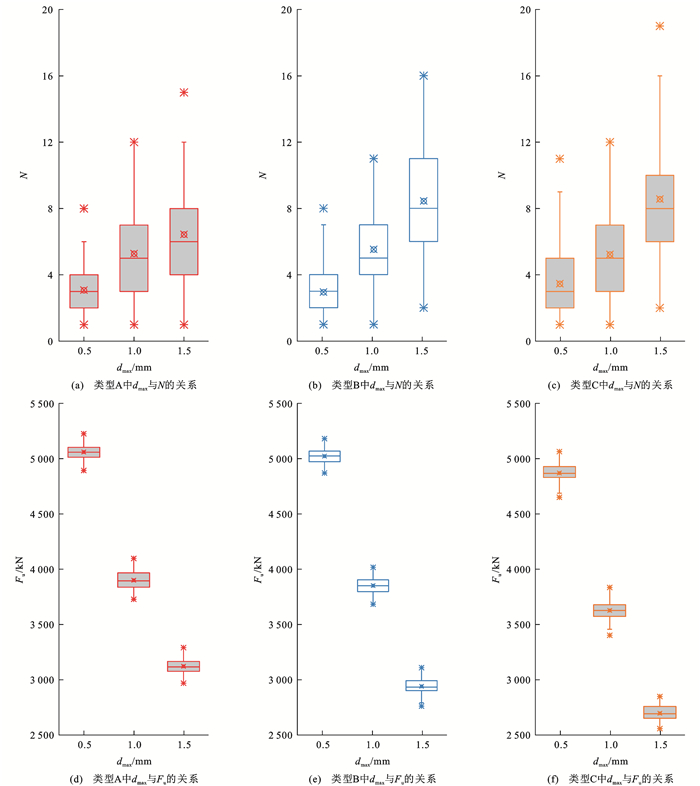
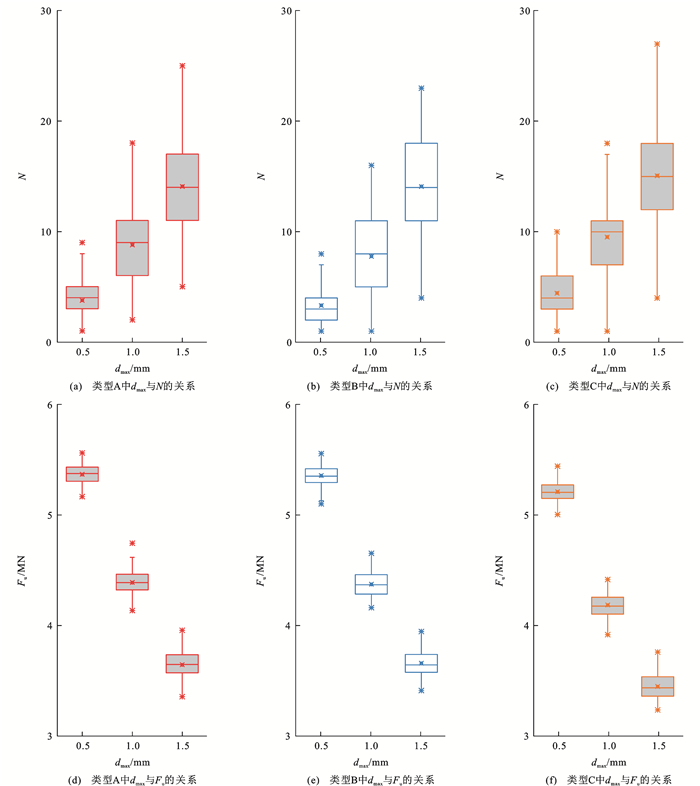
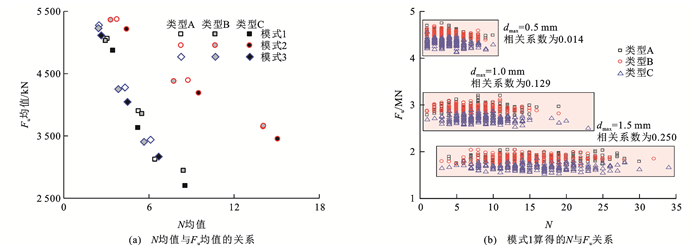
In order to enhance the evaluation accuracy of the ultimate bearing capacity of stayed cables, the influence of corrosion damage on the stayed cables was considered, the mechanical property model of corroded steel wires was established, and the mechanical properties of intact and corroded steel wires were simulated. Based on the combined action of three typical cross-section corrosion distribution models, and three typical corrosion distribution model types along the cable length direction, the corrosion degrees at different positions in the stayed cable were analyzed, and the distribution law of the corrosion in the stayed cable was studied. The Monte Carlo method was used to simulate the mechanical properties of the steel wire in the cable under different corrosion degrees, and the ultimate bearing capacity of the cable was finally obtained, as well as the number of broken wires when the stayed cable reached the ultimate bearing capacity. The correlation among the ultimate bearing capacity, the number of broken wires, the corrosion depth, and the cross-section corrosion rate of the stayed cable was statistically analyzed. The influence of corrosion distribution law was analyzed. Analysis results show that under different corrosion distribution conditions, when the corroded stayed cable reaches the ultimate bearing capacity, the sample mean difference of the numbers of broken wires may reach about three times, while the sample mean change of the ultimate bearing capacity of the stayed cable can reach about 20%. When the stayed cable reaches the ultimate bearing capacity, the number of broken wires increases with the increase of corrosion degree. But the correlation between the number of broken wires and the ultimate bearing capacity is poor, even only 0.014 under some corrosion distribution conditions. In order to ensure the safety and reliability of the stayed cable, the number of broken wires should not be used as a technical index to evaluate the bearing capacity of cables.

| [1] |
ENGELUND S, FABER M. Planning of ultrasonic inspections of parallel wire cables[C]//ASCE. Proceedings of 8th ASCE Specialty Conference on Probabilistic Mechanics and Structural Reliability. Reston: ASCE, 2000: 1-6.
|
| [2] |
FAN Bing-hui, SU Jia-zhan, CHEN Bao-chun. Condition evaluation for through and half-through arch bridges considering robustness of suspended deck systems[J]. Advances in Structural Engineering, 2020, 24(5): 962-976.
|
| [3] |
NI Yan-chun, ZHANG Qi-wei, XIN Rong-ya. Magnetic flux detection and identification of bridge cable metal area loss damage[J]. Measurement, 2021, 167(10): 108443.
|
| [4] |
SARCOS-PORTILLO A, NAVARRO-CERPA A, GARCIA-LEGL H. Inspection and process of tension of cables of General Rafael Urdaneta Bridge[J]. Journal of Bridge Engineering, 2003, 8(4): 223-228. doi: 10.1061/(ASCE)1084-0702(2003)8:4(223)
|
| [5] |
MATTEO J, DEODATIS G, BILLINGTON D P. Safety analysis of suspension-bridge cables: Williamsburg Bridge[J]. Journal of Structural Engineering, 1996, 120(11): 3197-3211.
|
| [6] |
STALLINGS J M, FRANK K H. Stay-cable fatigue behavior[J]. Journal of Structural Engineering, 1991, 117(3): 936-950. doi: 10.1061/(ASCE)0733-9445(1991)117:3(936)
|
| [7] |
FABER M H, ENGELUND S, RACKWITZ R. Aspects of parallel wire cable reliability[J]. Structural Safety, 2003, 25(2): 201-225. doi: 10.1016/S0167-4730(02)00057-7
|
| [8] |
CAMO S. Probabilistic strength estimates and reliability of damaged parallel wire cables[J]. Journal of Bridge Engineering, 2003, 8(5): 297-311. doi: 10.1061/(ASCE)1084-0702(2003)8:5(297)
|
| [9] |
ELACHACHI S M, BREYSSE D, YOTTE S, et al. A probabilistic multi-scale time dependent model for corroded structural suspension cables[J]. Probabilistic Engineering Mechanics, 2006, 21(3): 235-245. doi: 10.1016/j.probengmech.2005.10.006
|
| [10] |
LAN Cheng-ming, WU Jing-yu, BAI Na-ni, et al. Size effect on tensile strength of parallel CFRP wire stay cable[J]. Composite Structures, 2017, 181(2): 96-111.
|
| [11] |
KARANCI E, BETTI R. Modeling corrosion in suspension bridge main cables. Ⅱ: long-term corrosion and remaining strength[J]. Journal of Bridge Engineering, 2018, 23(6): 04018026. doi: 10.1061/(ASCE)BE.1943-5592.0001234
|
| [12] |
LIU Zhong-xiang, GUO Tong, HAN Da-guang, et al. Experimental study on corrosion-fretting fatigue behavior of bridge cable wires[J]. Journal of Bridge Engineering, 2020, 25(12): 04020104. doi: 10.1061/(ASCE)BE.1943-5592.0001642
|
| [13] |
TIAN Hao, WANG Ji-ji, CAO Su-gong, et al. Probabilistic assessment of the safety of main cables for long-span suspension bridges considering corrosion effects[J]. Advances in Civil Engineering, 2021, 4: 6627762.
|
| [14] |
LIU Xiao-dong, HAN Wan-shui, YUAN Yang-guang, et al. Corrosion fatigue assessment and reliability analysis of short suspender of suspension bridge depending on refined traffic and wind load condition[J]. Engineering Structures, 2021, 234: 111950. doi: 10.1016/j.engstruct.2021.111950
|
| [15] |
HOPWOOD T, HAVENS J H. Inspection, prevention, and remedy of suspension bridge cable corrosion problems[R]. Lexington: Kentucky Transportation Research Program, 1984.
|
| [16] |
PAN Xiao-yu, XIE Xu, LI Xiao-zhang, et al. Mechanical properties and grading method of corroded high-tensile steel wires[J]. Journal of Zhejiang University (Engineering Science), 2014, 48(11): 1917-1924. (in Chinese) https://www.cnki.com.cn/Article/CJFDTOTAL-ZDZC201411002.htm
|
| [17] |
LI Hui, LAN Cheng-ming, JU Yang, et al. Experimental and numerical study of the fatigue properties of corroded parallel wire cables[J]. Journal of Bridge Engineering, 2012, 17(2): 211-220. doi: 10.1061/(ASCE)BE.1943-5592.0000235
|
| [18] |
NAKAMURA S I, SUZUMURA K. Hydrogen embrittlement and corrosion fatigue of corroded bridge wires[J]. Journal of Constructional Steel Research, 2009, 65(2): 269-277. doi: 10.1016/j.jcsr.2008.03.022
|
| [19] |
LI Shun-long, XU Yang, ZHU Song-ye, et al. Probabilistic deterioration model of high-strength steel wires and its application to bridge cables[J]. Structure and Infrastructure Engineering, 2014, DOI: 10.1080/15732479.2014.948462.
|
| [20] |
CAO Y, VERMAAS G W, BETTI R, et al. Corrosion and degradation of high-strength steel bridge wire[J]. Corrosion, 2003, 59(6): 547-554. doi: 10.5006/1.3277586
|
| [21] |
YUAN Yang-guang, LIU Xiao-dong, PU Guang-ning, et al. Temporal and spatial variability of corrosion of high-strength steel wires within a bridge stay cable[J]. Construction and Building Materials, 2021, 308(2): 125108.
|
| [22] |
TORIBIO J, OVEJERO E. Effect of cold drawing on microstructure and corrosion performance of high-strength steel[J]. Mechanics of Time-Dependent Materials, 1997, 1(3): 307-319. doi: 10.1023/A:1009714222132
|
| [23] |
ELICES M. Influence of residual stresses in the performance of cold-drawn pearlitic wires[J]. Journal of Materials Science, 2004, 39(12): 3889-3899. doi: 10.1023/B:JMSC.0000031470.31354.b5
|
| [24] |
XU Jun, CHEN Wei-zhen. Behavior of wires in parallel wire stayed cable under general corrosion effects[J]. Journal of Constructional Steel Research, 2013, 85: 40-47. doi: 10.1016/j.jcsr.2013.02.010
|
| [25] |
LI Shun-long, XU Yang, LI Hui, et al. Uniform and pitting corrosion modeling for high-strength bridge wires[J]. Journal of Bridge Engineering, 2014, 19(7): 4014025. doi: 10.1061/(ASCE)BE.1943-5592.0000598
|
| [26] |
KARANCI E, BETTI R. Modeling corrosion in suspension bridge main cables. Ⅰ: annual corrosion rate[J]. Journal of Bridge Engineering, 2018, 23(6): 04018025. doi: 10.1061/(ASCE)BE.1943-5592.0001233
|
| [27] |
SUZUMURA K, NAKAMURA S I. Environmental factors affecting corrosion of galvanized steel wires[J]. Journal of Materials in Civil Engineering, 2004, 16(1): 1-7. doi: 10.1061/(ASCE)0899-1561(2004)16:1(1)
|
| [28] |
KARANCI E. Modeling corrosion in suspension bridge main cables[D]. New York: Columbia University, 2017.
|
| [29] |
LU Wen-gao, HE Zheng. Vulnerability and robustness of corroded large-span cable-stayed bridges under marine environment[J]. Journal of Performance of Constructed Facilities, 2016, 30(1): 04014204. doi: 10.1061/(ASCE)CF.1943-5509.0000727
|
| [30] |
NAKAMURA S I, FURUYA K, KITAGAWA M, et al. Corrosion performance of new suspension bridge cable protection[C]//IABSE. Proceedings of 16th Congress of IABSE. Lucerne: IABSE, 2000: 1-8.
|
Copyright《Journal of Traffic and Transportation Engineering》编辑部陕ICP备05001904号-1
Address :Editorial Department of Journal of Traffic and Transportation Engineering, Chang 'an University, Middle Section of South Second Ring Road, Xi 'an, Shaanxi(710064) Tel:029-82334388 Email:jygc@chd.edu.cn
All visit:Today's visit:
Supported by:
Beijing Renhe Information Technology Co. Ltd





 DownLoad: