


Calculation method of interior aerodynamic noises with middle and high frequencies for high-speed train
Article Text (Baidu Translation)
-
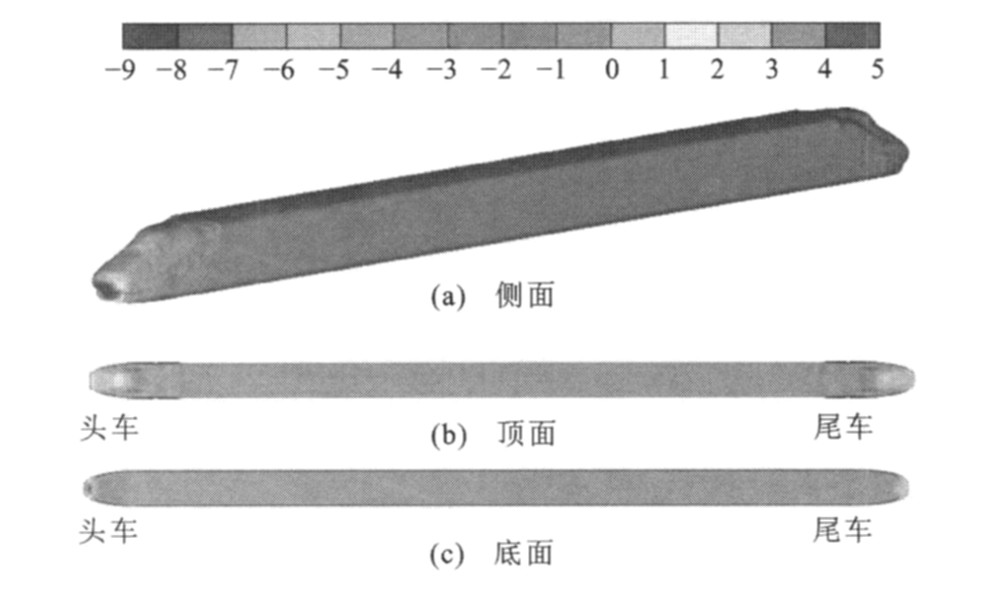
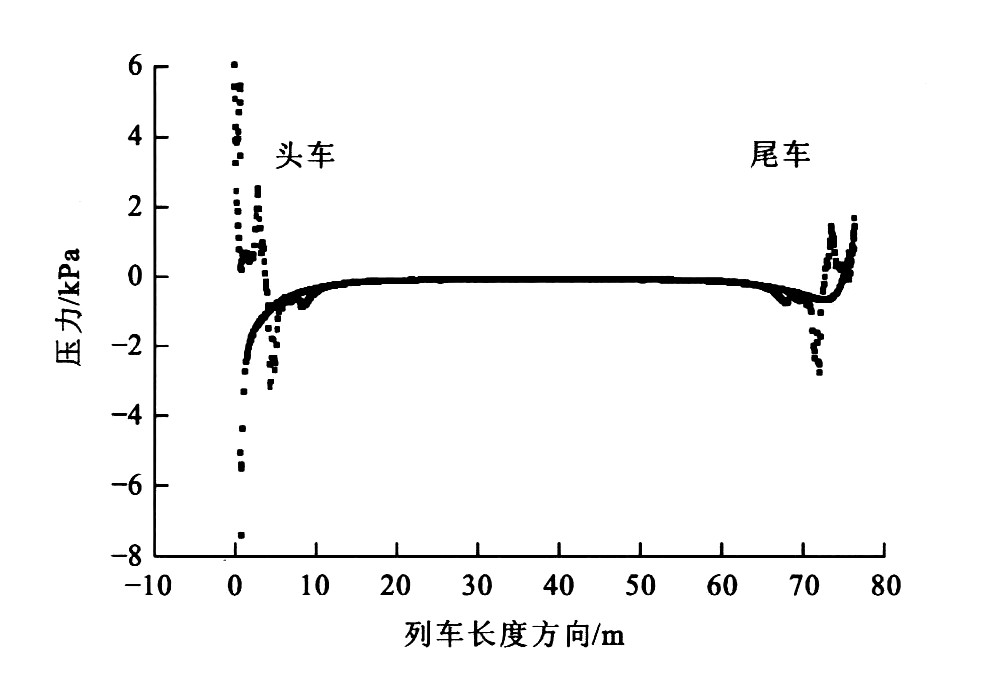
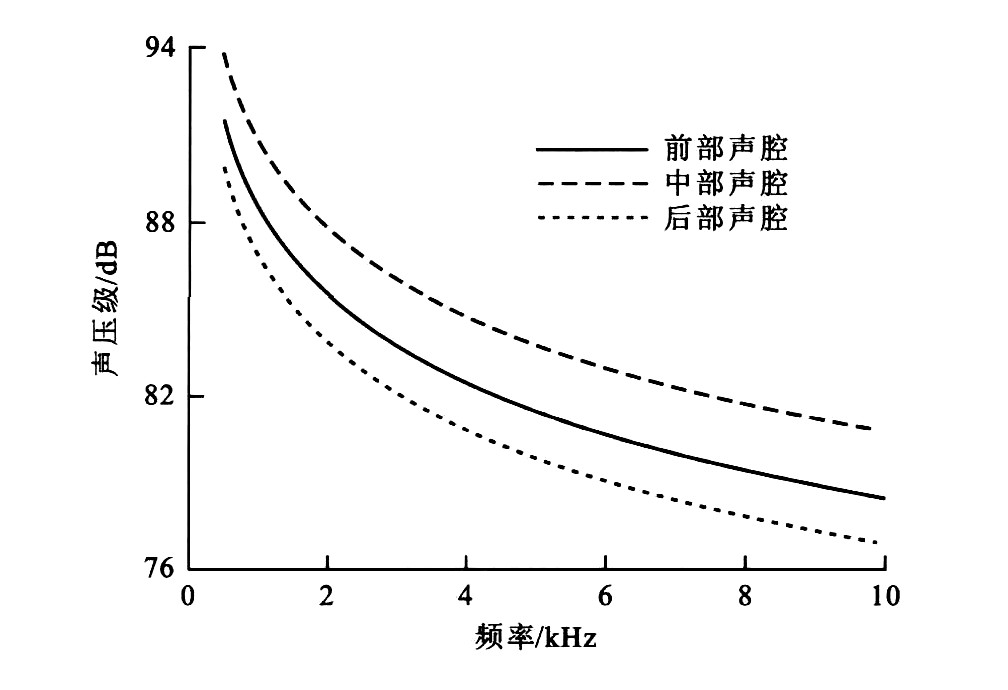
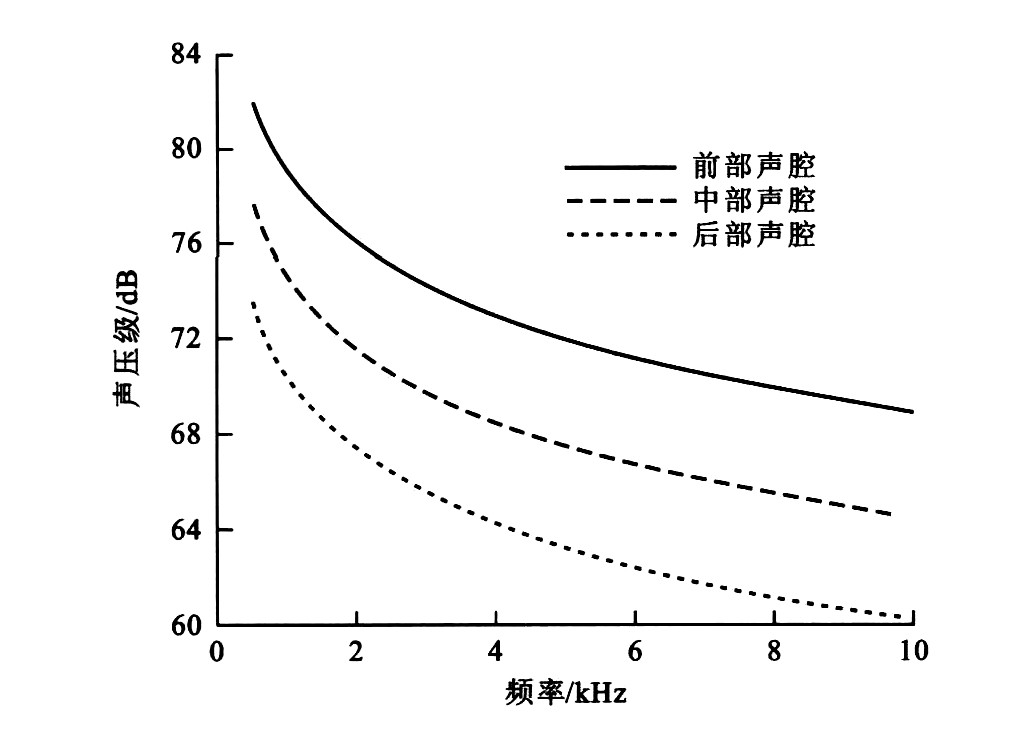
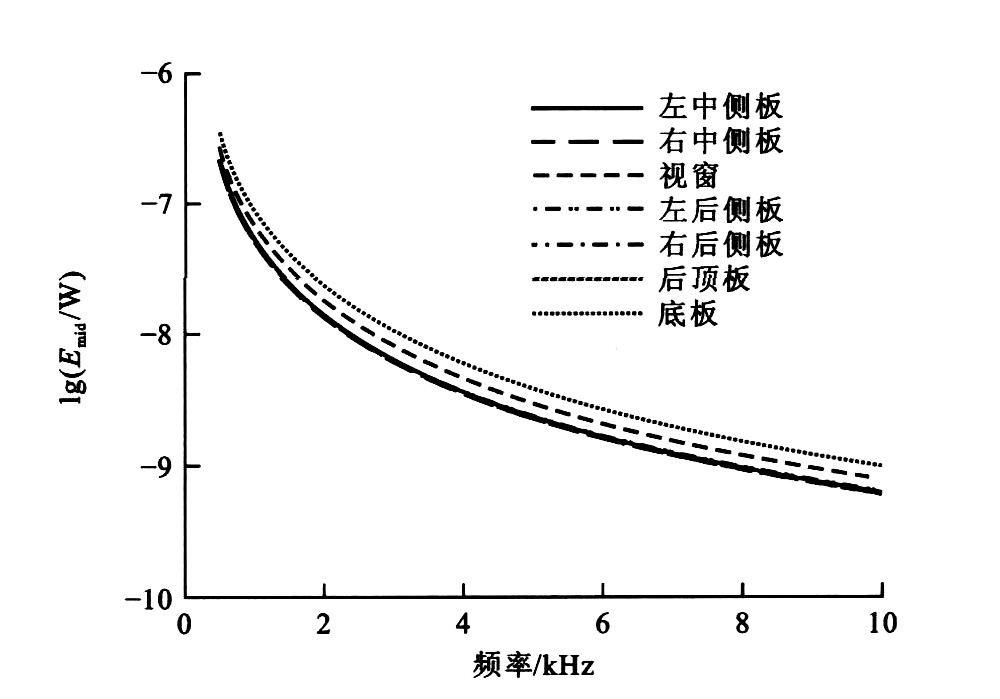
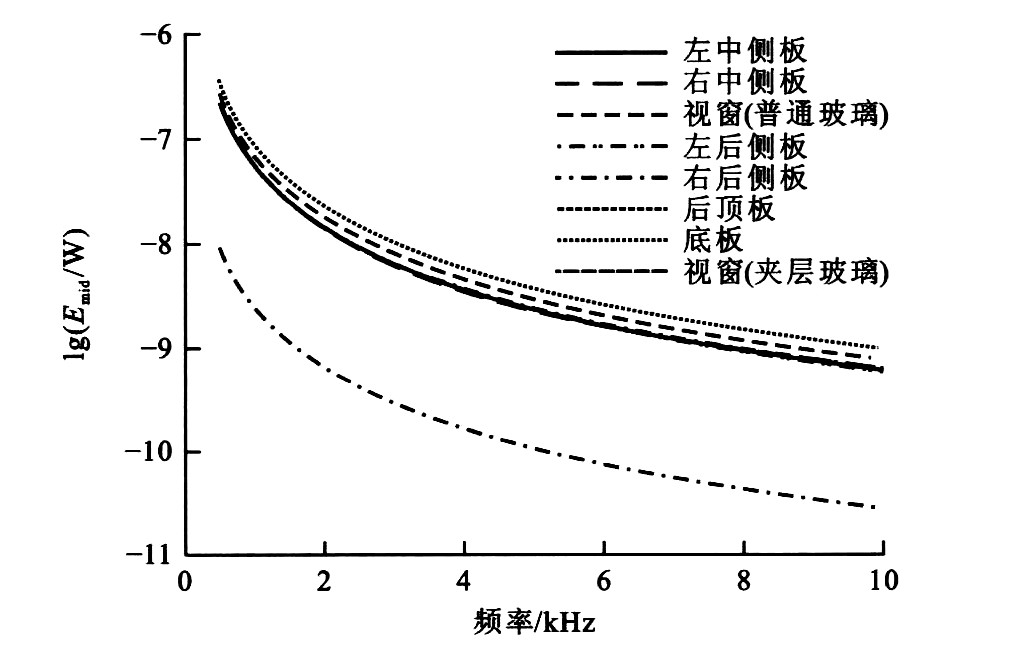
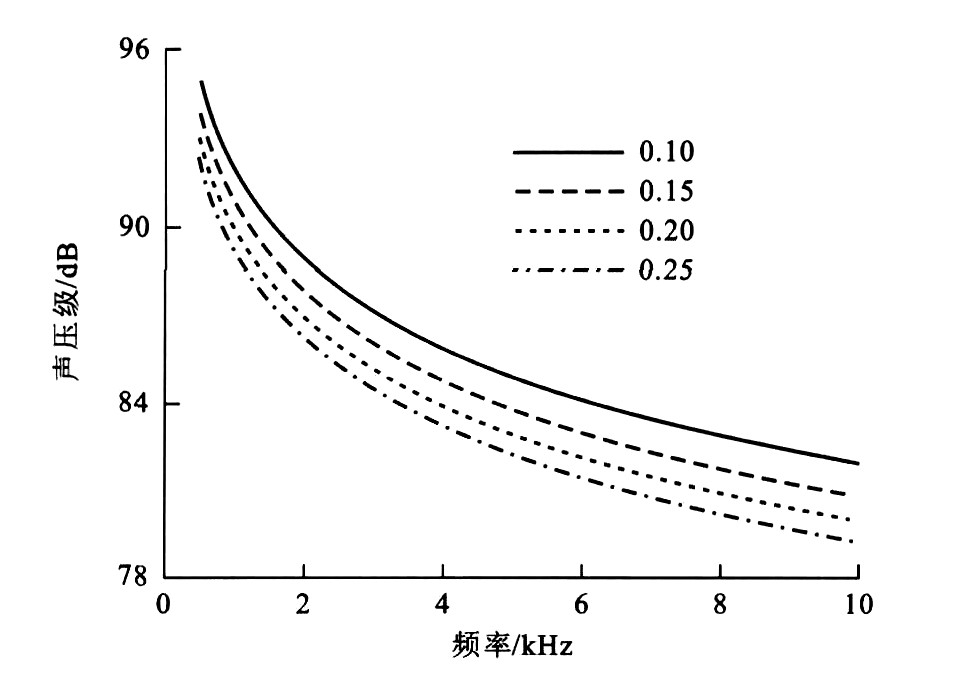
摘要: 利用SST k-w湍流模型计算了高速列车的外部非定常流场, 提取了车身表面的脉动压力; 基于统计能量分析理论, 建立了高速列车车内中高频气动噪声分析模型, 确定了模型中各个子系统的参数, 计算了由车外脉动压力诱发产生的车内气动噪声。计算结果表明: 高速列车车头的脉动压力变化最剧烈; 在中高频范围内, 司机室和乘客室的声压级随着频率的增大而减小, 在频率为0.5 kHz时, 司机室的最大声压级为93.79 dB, 乘客室的最大声压级为81.99 dB; 在各个频率下, 司机室3个声腔的声压级的最大差值为3.89 dB, 乘客室3个声腔的声压级的最大差值为8.69 dB; 司机室的声压级大于乘客室的声压级, 司机室中部声腔的声压级最大, 且主要能量输入来自于车窗和底板。通过对车窗进行有效设计及改善车内吸声性能, 能够降低车内气动噪声。Abstract: The external unsteady flow field of high-speed train was calculated by using SST k-w turbulence model, and the fluctuating pressure of body surface was extracted. Based on the statistical energy analysis(SEA) theory, the analysis model of interior aerodynamic noises with middle and high frequencies for high-speed train was established, the parameters of each subsystem in the model were determined, and the interior aerodynamic noise induced by external fluctuating pressure was calculated. Calculation result shows that the change of fluctuating pressure on the head car of high-speed train is most dramatic. For middle and high frequencies, the sound pressure levels of cab and passenger room decrease with the increasing of frequency. When frequency is 0.5 kHz, the maximum sound pressure level of cab is 93.79 dB, and the maximum sound pressure level of passenger room is 81. 99 dB. For each frequency, the maximum difference of sound pressure levels for the three cavities of cab is 3. 89 dB. The maximum difference of sound pressure levels of the three cavities of passenger room is 8.69 dB. The sound pressure level of cab is larger than that of passenger room, the sound pressure level of the middle cavity of cab is largest, and the main energy inputs of middle cavity of cab are from window and floor. The interior aerodynamic noise can reduce through the effective design of window and improving the interior sound-absorbing performance of hig-speed train.
-
[1] 沈志云. 高速列车的动态环境及其技术的根本特点[J]. 铁道学报, 2006, 28(4): 1-5. doi: 10.3321/j.issn:1001-8360.2006.04.001SHENZhi-yun. Dynamic environment of high-speedtrain and its distinguished technology[J]. Journal of the China Railway Society, 2006, 28(4): 1-5. (in Chinese) doi: 10.3321/j.issn:1001-8360.2006.04.001 [2] TALOTTE C. Aerodynamic noise: a cirtical survey[J]. Journal of Sound and Vibration, 2000, 231(3): 549-562. doi: 10.1006/jsvi.1999.2544 [3] 宫镇, 夏恒, 曾发林, 等. 高速车辆内部气流噪声的统计能量分析[J]. 农业机械学报, 2003, 34(2): 7-10. https://www.cnki.com.cn/Article/CJFDTOTAL-NYJX200302002.htmGONG Zhen, XIA Heng, ZENG Fa-lin, et al. Statistical energy analysis of interior aerodynamic noise of high-speed automobile[J]. Transactions of the Chinese Society for Agricultural Machinery, 2003, 34(2): 7-10. (in Chinese) https://www.cnki.com.cn/Article/CJFDTOTAL-NYJX200302002.htm [4] 夏恒, 宫镇, 陆森林. 用边界元法计算高速车辆内部气流噪声[J]. 江苏大学学报: 自然科学版, 2003, 24(1): 47-50. https://www.cnki.com.cn/Article/CJFDTOTAL-JSLG200301011.htmXIA Heng, GONG Zhen, LU Sen-lin. Calculations about interior aerodynamic noise for high-speed automobile by BEM[J]. Journal of Jiangsu University: Natural Science Edition, 2003, 24(1): 47-50. (in Chinese) https://www.cnki.com.cn/Article/CJFDTOTAL-JSLG200301011.htm [5] NOGER C, PATRATJ C, PEUBE J, et al. Aeroacoustical study of the TGV pantograph recess[J]. Journal of Sound and Vibration, 2000, 231(3): 563-575. doi: 10.1006/jsvi.1999.2545 [6] FREDMION N, VINCENT N, JACOB M, et al. Aerodynamic noise radiated by the intercoach spacing and the bogie of a high-speed train[J]. Journal of Sound and Vibration, 2000, 231(3): 577-593. doi: 10.1006/jsvi.1999.2546 [7] KITAGAWA T, NAGAKURAK K. Aerodynamic noise generated by shinkansen cars[J]. Journal of Sound and Vibration, 2000, 231(3): 913-924. doi: 10.1006/jsvi.1999.2639 [8] MELLETA C, LETOURNEAUXA F, POISSONB F, et al. High speed train noise emission: latest investigation of the aerodynamic/rolling noise contribution[J]. Journal of Sound and Vibration, 2006, 293(3): 535-546. [9] SASSA T, SATO T, YATSUI S. Numerical analysis of aerody namic noise radiation from a high-speed train surface[J]. Journal of Sound and Vibration, 2001, 247(3): 407-416. [10] TAKAISHI T, SAGAWA A, NAGAKURA K, et al. Numerical analysis of dipole sound source around high speed trains[J]. Journal of the Acoustical Society of America, 2002, 111(6): 2601-2608. [11] TAKAISHI T, IKEDA M, KATO C. Method of evaluating dipole sound source in a finite computational domain[J]. Journal of the Acoustical Society of America, 2004, 116(3): 1427-1435. [12] 刘加利. 高速列车气动噪声的理论研究与数值模拟[D]. 成都: 西南交通大学, 2009.LIU Jia-li. The theoretical research and numerical simulation of aerodynamic noise for high-speed train[D]. Chengdu: Southwest Jiaotong University, 2009. (in Chinese) [13] 肖友刚, 康志成. 高速列车车头曲面气动噪声的数值预测[J]. 中南大学学报: 自然科学版, 2008, 39(6): 1267-1272. https://www.cnki.com.cn/Article/CJFDTOTAL-ZNGD200806026.htmXIAO You-gang, KANG Zhi-cheng. Numerical prediction of aerodynamic noise radiated from high speed train head surface[J]. Journal of Central South University: Science and Technology, 2008, 39(6): 1267-1272. (in Chinese) https://www.cnki.com.cn/Article/CJFDTOTAL-ZNGD200806026.htm [14] 高宵鹏. 舰艇水动力噪声的数值分析与拖拽模拟测试技术研究[D]. 上海: 上海交通大学, 2007.GAO Xiao-peng. The study on numerical analysis of fluid noise and acoustic test with towed model[D]. Shanghai: Shanghai Jiaotong University, 2007. (in Chinese) [15] 刘全刚. 高速磁浮车的车内噪声控制计算研究[D]. 上海: 上海交通大学, 2008.LIU Quan-gang. Research on interior noise control of high-speed maglev train[D]. Shanghai: Shanghai Jiaotong University, 2008. (in Chinese) -

 下载:
下载:

图(8)
计量
- 文章访问数: 1060
- HTML全文浏览量: 144
- PDF下载量: 556
- 被引次数: 0
