


Review on structural mechanics performance of MARK Ⅲ cargo containment system for LNG carrier
Article Text (Baidu Translation)
-
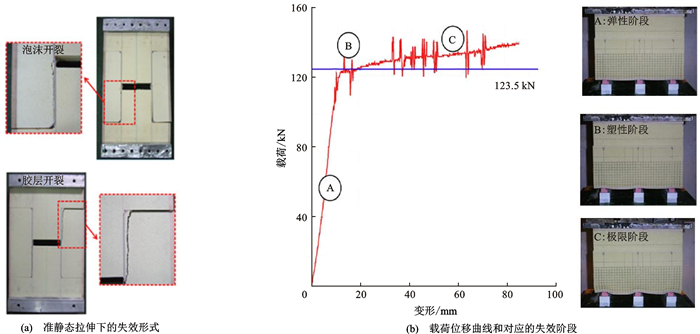
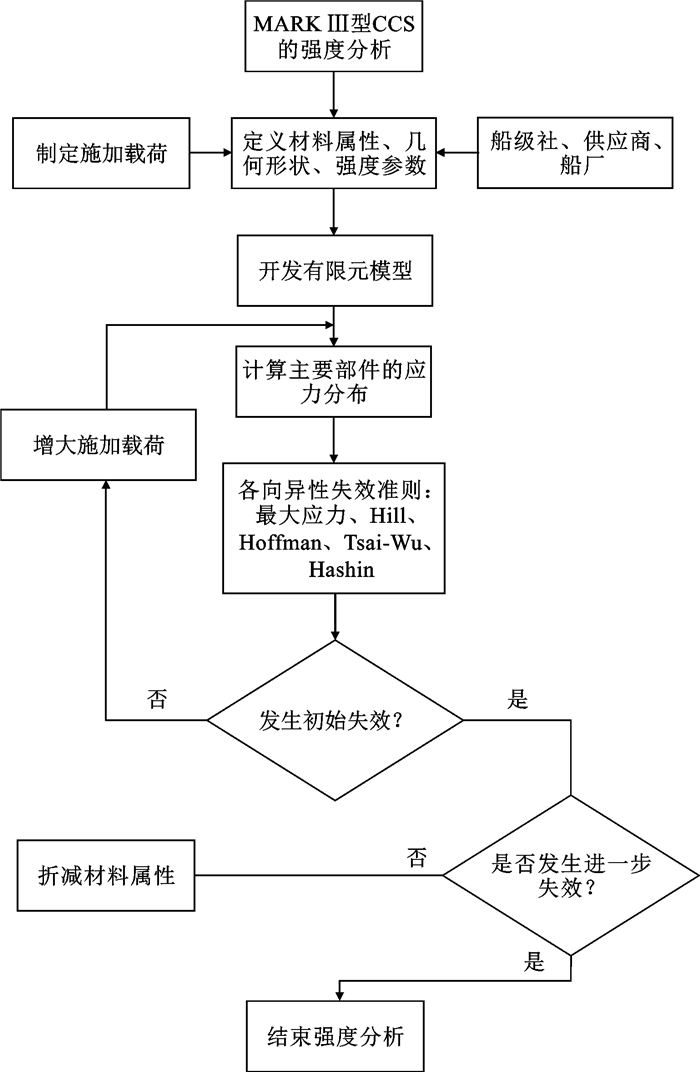
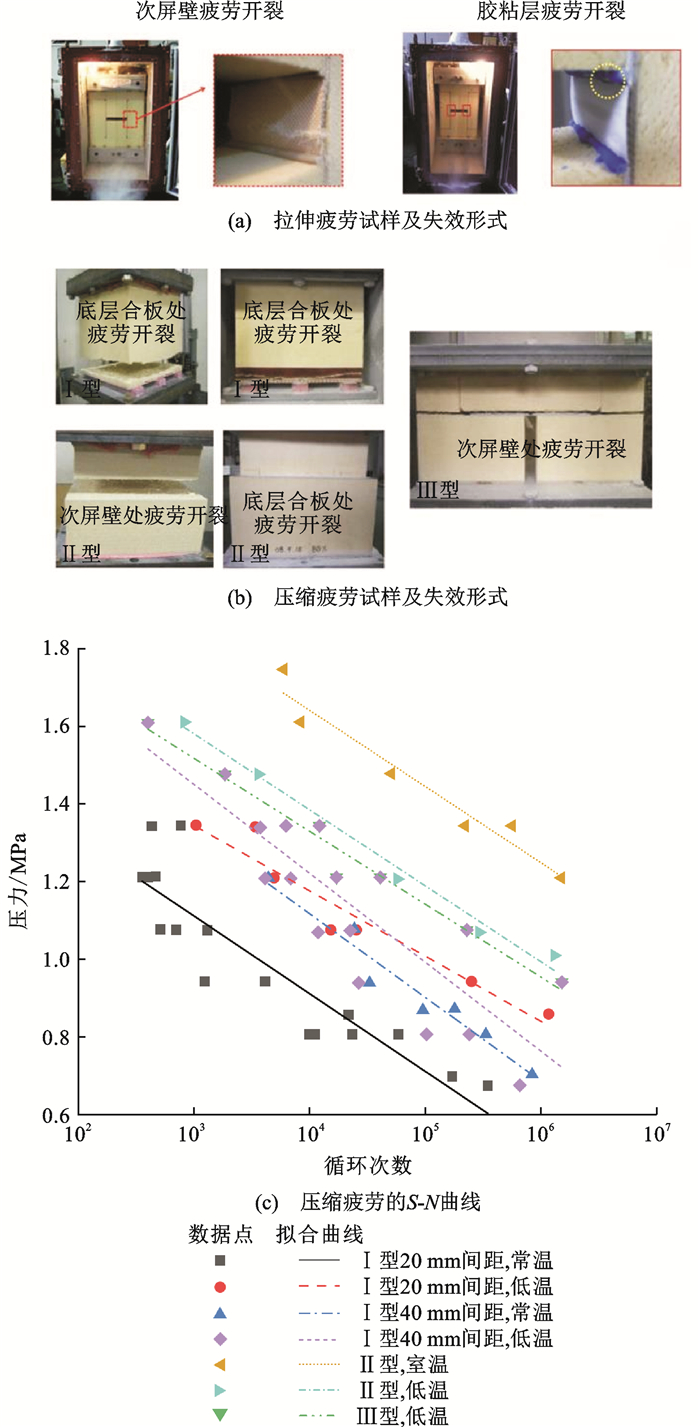
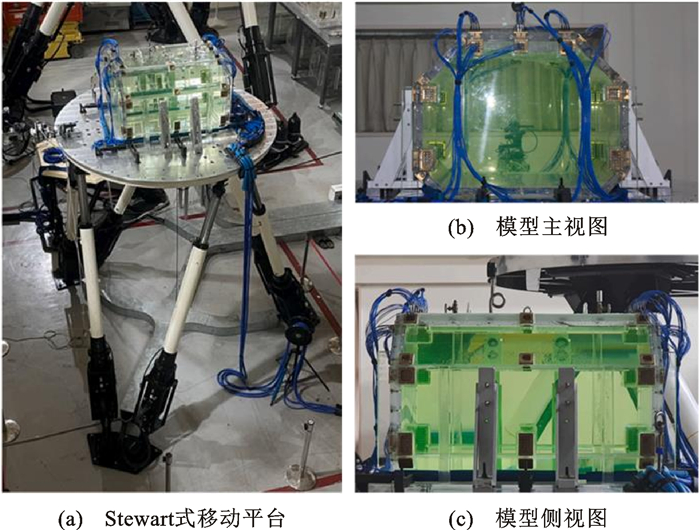
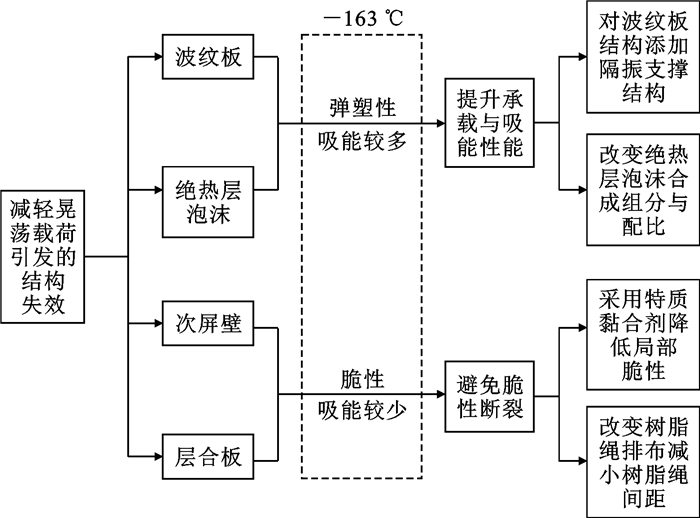
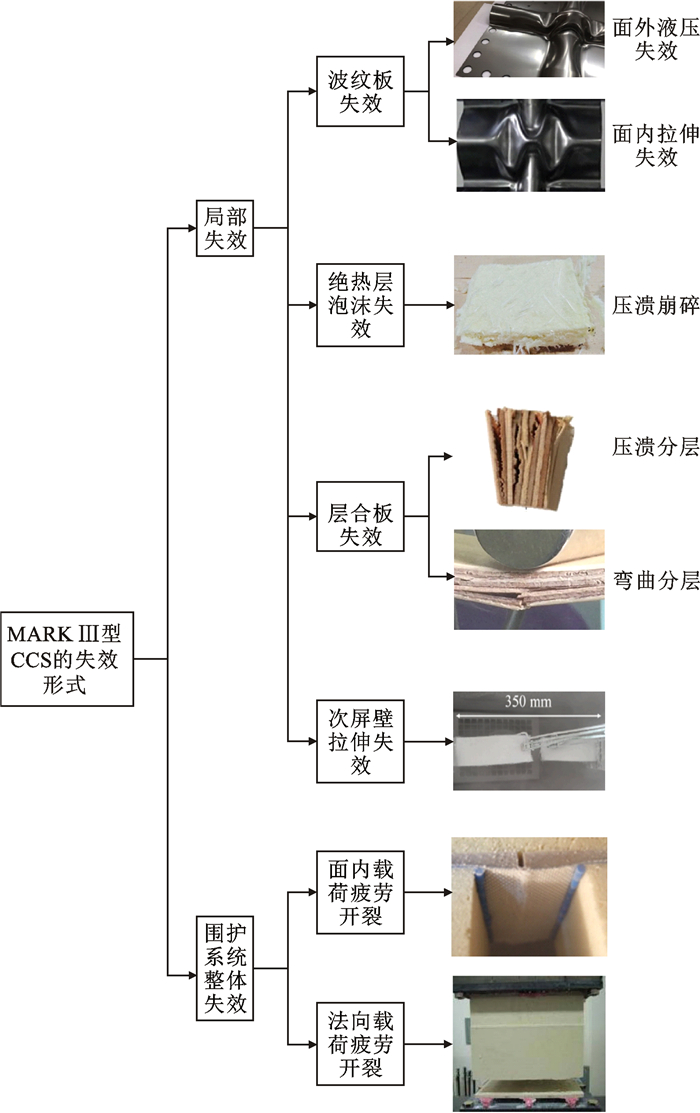
摘要: 为液化天然气运输船液货舱围护系统(CCS)的研究和制造提供参考,总结MARK Ⅲ型CCS在结构力学方面的研究成果,对其结构组成、材料应用、制造工艺、试验与理论方法等进行了概括。从标准试件试验、静载力学性能、交变载荷性能、冲击载荷性能等多个方面,总结了MARK Ⅲ型CCS相关研究进展,分析其中波纹板、层合板、绝热层泡沫、次屏壁等核心部分的力学性能,指出目前研究和方法上存在的不足,提出未来研究建议。研究结果表明:MARK Ⅲ型CCS在常规工况下,能应对航行中由风浪引起的静载、冲击、疲劳载荷,但在液货低温泄漏情况下的严重晃荡冲击可能导致CCS应力集中区域的脆性断裂失效;目前的落锤冲击试验方法未充分考虑实际航行海况中的动力学特性,未来需聚焦于液货冲击载荷的评估转化及落水冲击的试验方法;MARK Ⅲ型CCS属于薄膜型围护系统,无需额外支撑结构,相对于MOSS型和SPB型围护系统,具有小体积和轻质量的特性,因而具有更高的运输经济效益,未来薄膜型CCS的研发应重点关注小厚度、轻质量、一体化、高承载能力等指标;现有层合板和次屏壁的研究主要针对标准试件的力学性能,缺乏在复杂载荷下的实船应用场景,未来的相关研究应从实船结构出发,测试层合板和次屏壁的力学性能。本研究对MARK Ⅲ型CCS结构力学性能进行综述,可为未来研究和相关规范的制定提供参考。
-
关键词:
- 船舶工程 /
- MARK Ⅲ型液货舱围护系统 /
- 综述 /
- LNG运输船 /
- 结构力学
Abstract: To provide a reference for the research and manufacturing of the cargo containment system (CCS) for liquefied natural gas (LNG) carriers, research achievements on the structural mechanics of the MARK Ⅲ CCS were summarized. The structural composition, material application, manufacturing process, testing methods, and theoretical approaches were outlined. From the aspects of standard specimen tests, static mechanical performance, alternating load performance, and impact load performance, research progress related to the MARK Ⅲ cargo containment system was reviewed. The mechanical properties of key components, including the stainless-steel membrane, laminated plywood, insulation foam, and secondary barrier were analyzed. Existing deficiencies in research objects and methods were identified, and suggestions for future research were proposed. It is indicated that static loads, impact loads, and fatigue loads caused by wind and waves during navigation under normal operating conditions can be withstood by the MARK Ⅲ CCS. Brittle fracture failure in stress concentration areas of the CCS may be caused by severe sloshing impact under low-temperature conditions due to cargo leakage. It is indicated that the dynamic characteristics under actual sailing sea conditions are not fully considered in the current drop-weight impact test method. Future work should be focused on the evaluation and transformation of cargo impact loads and on experimental methods for water impact. The MARK Ⅲ CCS is identified as a membrane-type containment system and is characterized by the absence of additional supporting structure. Compared with MOSS-type and SPB-type cargo containment systems, smaller volume and lower mass are achieved, and higher transportation economic efficiency is obtained. Future development of membrane-type CCS should be focused on indicators such as reduced thickness, low mass, integration, and high load-bearing capacity. Existing research on laminated plywood and the secondary barrier is mainly focused on the mechanical properties of standard specimens, lacking real-ship application scenarios under complex loading conditions. Future research should be conducted based on actual ship structures, and the mechanical performance of laminated plywood and the secondary barrier should be tested accordingly. A review of the structural mechanical performance of the MARK Ⅲ CCS is provided, and a reference for future research and the formulation of relevant standards is offered.-
Key words:
- ship engineering /
- MARK Ⅲ cargo containment system /
- review /
- LNG carrier /
- structural mechanics
-

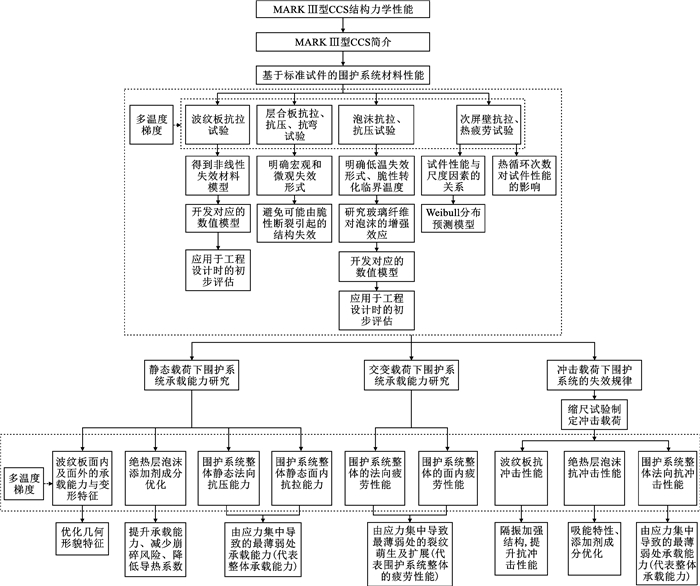
图 1 MARK Ⅲ型CCS结构力学性能的研究路线
Figure 1. Research route for the structural mechanics performance of MARK Ⅲ CCS


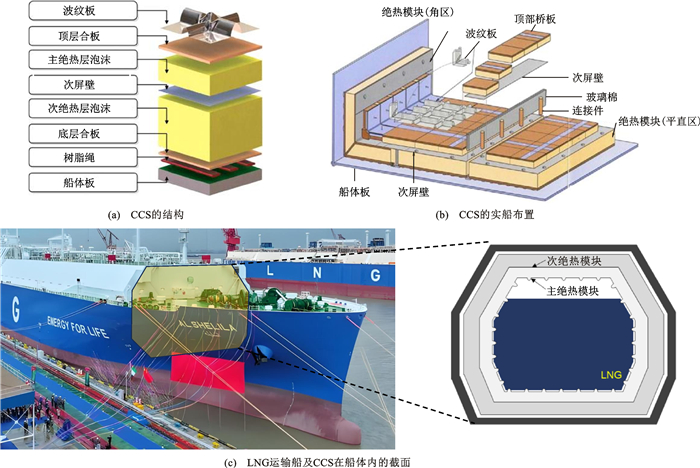
名称 厚度/mm 波纹板 1.2 顶层合板 12 主绝热层泡沫 88 次屏壁 0.7 次绝热层泡沫 161 底层合板 9  下载: 导出CSV
表 2 MARK Ⅲ型CCS常温及低温极限承载能力
Table 2. Ultimate capacity of MARK Ⅲ CCS at room temperature and low temperature
部件 常温(25 ℃) 低温(-163 ℃、-110 ℃) 参考文献 波纹板承载能力/MPa 抗拉: 模量195 000, 强度170 抗拉: 模量195 000, 强度700 [27]、[28] 层合板承载能力/MPa 抗压: 模量80,强度6.11抗拉: 强度65.81抗弯: 模量5 680,强度55.90 抗压: 模量210,强度81.00抗拉: 强度67.70抗弯:模量: 9 490,强度92.70 [24]、[32] 绝热层泡沫承载能力/MPa 抗压: 模量67,强度1.56抗拉: 模量134,强度2.52 抗压: 模量142,强度1.97 [63]、[34] 次屏壁承载能力/MPa 抗拉: 模量6 400,强度187 抗拉: 模量10 822,强度369 [26]、[36] 围护系统整体疲劳循环次数 法向: 不小于163 面内(-110 ℃): 不小于7 050;法向(-163 ℃): 不小于145 [6]、[21]
下载: 导出CSV
-
[1] DEN ELZEN M, FEKETE H, HÖHNE N, et al. Greenhouse gas emissions from current and enhanced policies of China until 2030: Can emissions peak before 2030?[J]. Energy Policy, 2016, 89: 224-236. doi: 10.1016/j.enpol.2015.11.030 [2] IEA. Energy and air pollution special report: The environmental case for natural gas[R]. Paris: International Energy Agency, 2016. [3] YIN Y W, LAM J S L. Bottlenecks of LNG supply chain in energy transition: A case study of China using system dynamics simulation[J]. Energy, 2022, 250: 123803. doi: 10.1016/j.energy.2022.123803 [4] Oxford Energy. What drives international gas prices in competitive markets? Four fallacies and a hypothesis[R]. Oxford: Oxford Institute for Energy Studies, 2024. [5] YAN Z J, YANG G H, HE R, et al. "Ship-port-country" multi-dimensional research on the fine analysis of China's LNG trade[J]. Journal of Transport Geography, 2023, 110: 103619. doi: 10.1016/j.jtrangeo.2023.103619 [6] HYEON S K, MIN S C, JAE M L, et al. A comparative evaluation of fatigue and fracture characteristics of structural components of liquefied natural gas carrier insulation system[J]. Journal of Pressure Vessel Technology, 2013, 135(2): 021405. doi: 10.1115/1.4007473 [7] FERNÁNDEZ I A, GÓMEZ M R, GÓMEZ J R, et al. Review of propulsion systems on LNG carriers[J]. Renewable and Sustainable Energy Reviews, 2017, 67: 1395-1411. doi: 10.1016/j.rser.2016.09.095 [8] YIN L, JU Y L. Review on the design and optimization of BOG re-liquefaction process in LNG ship[J]. Energy, 2022, 244: 123065. doi: 10.1016/j.energy.2021.123065 [9] LI T T, HE X, GAO P. Analysis of offshore LNG storage and transportation technologies based on patent informatics[J]. Cleaner Engineering and Technology, 2021, 5: 100317. doi: 10.1016/j.clet.2021.100317 [10] MURMU S B. Alternatives derived from renewable natural fibre to replace conventional polyurethane rigid foam insulation[J]. Cleaner Engineering and Technology, 2022, 8: 100513. doi: 10.1016/j.clet.2022.100513 [11] DIAS F, GHIDAGLIA J M. Slamming: Recent progress in the evaluation of impact pressures[J]. Annual Review of Fluid Mechanics, 2018, 50: 243-273. doi: 10.1146/annurev-fluid-010816-060121 [12] MALENICA S, DIEBOLD L, KWON S H, et al. Sloshing assessment of the LNG floating units with membrane type containment system where we are?[J]. Marine Structures, 2017, 56: 99-116. doi: 10.1016/j.marstruc.2017.07.004 [13] LIU L S, GUO T, ZHOU Y Y, et al. Review of the design and optimization of BOG re-liquefaction process for LNG carriers[J]. Cryogenics, 2024, 142: 103924. doi: 10.1016/j.cryogenics.2024.103924 [14] 崔连德. GTT薄膜CCS进化史[J]. 中国船检, 2022, (4): 85-88.CUI Lian-de. Evolution history of GTT membrane cargo containment system[J]. China Ship Survey, 2022, (4): 85-88. [15] 楼丹平, 杨春华. LNG船技术发展趋势[J]. 船舶, 2023, 34(4): 19-27.LOU Dan-ping, YANG Chun-hua. Technology development trends of LNG carrier[J]. Ship & Boat, 2023, 34(4): 19-27. [16] 冯明, 刘艳年. LNG液舱围护系统发展现状及趋势分析[J]. 船电技术, 2021, 41(12): 25-30.FENG Ming, LIU Yan-nian. Status and development trend of LNG tank containment system[J]. Marine Electric & Electronic Engineering, 2021, 41(12): 25-30. [17] 刘碧涛, 曹林, 王江超, 等. LNG运输船液货舱围护系统建造工艺及关键技术[J]. 船舶工程, 2023, 45(8): 127-134, 181.LIU Bi-tao, CAO Lin, WANG Jiang-chao, et al. Construction processing and key technology of containment system of liquid cargo tank of LNG carrier[J]. Ship Engineering, 2023, 45(8): 127-134, 181. [18] 陈振款, 何建萍, 李芳, 等. MARK Ⅲ型液货围护系统波纹板焊接研究现状[J]. 船舶与海洋工程, 2023, 39(5): 1-7.CHEN Zhen-kuan, HE Jian-ping, LI Fang, et al. Study of corrugated membranes welding for MARK Ⅲ liquid cargo containment[J]. Naval Architecture and Ocean Engineering, 2023, 39(5): 1-7. [19] Gaztransport Technigaz. Vessels & land storages on order[R]. Saint-Remy-les-Chevreuse: Gaztransport Technigaz, 2024. [20] LEE C S, LEE J M. Failure analysis of reinforced polyurethane foam-based LNG insulation structure using damage-coupled finite element analysis[J]. Composite Structures, 2014, 107: 231-245. doi: 10.1016/j.compstruct.2013.07.044 [21] KIM M H, KIL Y P, LEE J M, et al. Cryogenic fatigue strength assessment for MARK Ⅲ insulation system of LNG carriers[J]. Journal of Offshore Mechanics and Arctic Engineering, 2011, 133(4): 041401. doi: 10.1115/1.4003389 [22] BAE J H, HWANG B K, KIM S K, et al. Statistical estimation of extreme sloshing impact pressure and its validation based on dynamic behavior of insulation materials[J]. Functional Composites and Structures, 2020, 2(1): 015001. doi: 10.1088/2631-6331/ab628c [23] KIM M S, KWON S B, KIM S K, et al. Impact failure analysis of corrugated steel plate in LNG containment cargo system[J]. Journal of Constructional Steel Research, 2019, 156: 287-301. doi: 10.1016/j.jcsr.2019.02.008 [24] CHA S J, KIM J D, KIM S K, et al. Effect of temperature on the mechanical performance of plywood used in membrane-type LNG carrier insulation systems[J]. Journal of Wood Science, 2020, 66(1): 28. doi: 10.1186/s10086-020-01875-2 [25] YU Y H, NAM S, LEE D, et al. Cryogenic impact resistance of chopped fiber reinforced polyurethane foam[J]. Composite Structures, 2015, 132: 12-19. doi: 10.1016/j.compstruct.2015.05.021 [26] JEONG Y J, KIM H T, KIM J H, et al. Analysis of glass fiber reinforced composites in membrane-type LNG cargo containment system for structural safety using experimentally defined mechanical properties[J]. Composite Structures, 2021, 276: 114532. doi: 10.1016/j.compstruct.2021.114532 [27] JEON S G, KIM J H, KIM J D, et al. Impact failure characteristics of LNG carrier cargo containment system[J]. International Journal of Mechanical Sciences, 2023, 240: 107938. doi: 10.1016/j.ijmecsci.2022.107938 [28] KIM J H, KIM S K, KIM M H, et al. Numerical model to predict deformation of corrugated austenitic stainless steel sheet under cryogenic temperatures for design of liquefied natural gas insulation system[J]. Materials & Design, 2014, 57: 26-39. [29] BO S, SOO Y. Fatigue life assessment of KC-1 membrane considering the effects of cryogenic temperature and plastic deformation[J]. International Journal of Precision Engineering and Manufacturing, 2020, 21(5): 905-914. doi: 10.1007/s12541-019-00273-z [30] SOHN J M, BAE D M, BAE S Y, et al. Nonlinear structural behaviour of membrane-type LNG carrier cargo containment systems under impact pressure loads at -163 ℃[J]. Ships and Offshore Structures, 2017, 12(5): 722-733. doi: 10.1080/17445302.2016.1218111 [31] KIM M S, KIM J H, KIM S K, et al. Experimental investigation of structural response of corrugated steel sheet subjected to repeated impact loading: Performance of LNG cargo containment system[J]. Applied Sciences, 2019, 9(8): 1558. doi: 10.3390/app9081558 [32] KIM J H, PARK D H, LEE C S, et al. Effects of cryogenic thermal cycle and immersion on the mechanical characteristics of phenol-resin bonded plywood[J]. Cryogenics, 2015, 72: 90-102. doi: 10.1016/j.cryogenics.2015.09.007 [33] PARK S B, LEE C S, CHOI S W, et al. Polymeric foams for cryogenic temperature application: Temperature range for non-recovery and brittle-fracture of microstructure[J]. Composite Structures, 2016, 136: 258-269. doi: 10.1016/j.compstruct.2015.10.002 [34] HAN D S, PARK I B, KIM M H, et al. The effects of glass fiber reinforcement on the mechanical behavior of polyurethane foam[J]. Journal of Mechanical Science and Technology, 2010, 24(1): 263-266. doi: 10.1007/s12206-009-1136-3 [35] PARK K B, KIM H T, HER N Y, et al. Variation of mechanical characteristics of polyurethane foam: Effect of test method[J]. Materials, 2019, 12(17): 2672. doi: 10.3390/ma12172672 [36] JEONG Y J, KIM H T, KIM J D, et al. Evaluation of mechanical properties of glass fiber-reinforced composites depending on length and structural anisotropy[J]. Results in Engineering, 2023, 17: 101000. doi: 10.1016/j.rineng.2023.101000 [37] KIM S K, LEE C S, KIM J H, et al. Computational evaluation of resistance of fracture capacity for SUS304L of liquefied natural gas insulation system under cryogenic temperatures using ABAQUS user-defined material subroutine[J]. Materials & Design, 2013, 50: 522-532. [38] PARK J S, KIM J H, JEONG Y C, et al. Effect of corrugated sheet diameter on structural behavior under cryogenic temperature and hydrodynamic load[J]. Metals, 2022, 12(3): 521. doi: 10.3390/met12030521 [39] JEONG Y J, KIM H T, KIM S K, et al. Evaluation of the pressure-resisting capability of membrane-type corrugated sheet under hydrodynamic load[J]. Thin-walled Structures, 2021, 162: 107388. doi: 10.1016/j.tws.2020.107388 [40] CHUL KIM B, HO YOON S, GIL LEE D. Pressure resistance of the corrugated stainless steel membranes of LNG carriers[J]. Ocean Engineering, 2011, 38(4): 592-608. doi: 10.1016/j.oceaneng.2010.12.013 [41] LEE D, KIM K H, CHOI I, et al. Pressure-resisting capability of the knot area of the primary barrier for a LNG containment system[J]. Ocean Engineering, 2015, 95: 128-133. doi: 10.1016/j.oceaneng.2014.11.021 [42] KIM J M, KIM J H, AHN J H, et al. Synthesis of nanoparticle- enhanced polyurethane foams and evaluation of mechanical characteristics[J]. Composites Part B: Engineering, 2018, 136: 28-38. doi: 10.1016/j.compositesb.2017.10.025 [43] OH J H, BAE J H, KIM J H, et al. Effects of Kevlar pulp on the enhancement of cryogenic mechanical properties of polyurethane foam[J]. Polymer Testing, 2019, 80: 106093. doi: 10.1016/j.polymertesting.2019.106093 [44] KIM J D, KIM J H, LEE D-H, et al. Synthesis and investigation of cryogenic mechanical properties of chopped-glass-fiber-reinforced polyisocyanurate foam[J]. Materials, 2021, 14(2): 446. doi: 10.3390/ma14020446 [45] CHOI I, YU Y H, LEE D G. Cryogenic sandwich-type insulation board composed of E-glass/epoxy composite and polymeric foams[J]. Composite Structures, 2013, 102: 61-71. doi: 10.1016/j.compstruct.2013.02.017 [46] PARK K J, KIM J H, KIM S K, et al. Material characteristics of random glass-mat-reinforced thermoplastic under cryogenic thermal cycles[J]. Science and Engineering of Composite Materials, 2019, 26(1): 270-281. doi: 10.1515/secm-2019-0013 [47] YU Y H, KIM B G, LEE D G. Cryogenic reliability of the sandwich insulation board for LNG ship[J]. Composite Structures, 2013, 95: 547-556. doi: 10.1016/j.compstruct.2012.07.007 [48] CHUN M S, KIM M H, KIM W S, et al. Experimental investigation on the impact behavior of membrane-type LNG carrier insulation system[J]. Journal of Loss Prevention in the Process Industries, 2009, 22(6): 901-907. doi: 10.1016/j.jlp.2008.09.011 [49] JEONG H K, YANG Y S. Strength analysis of mark Ⅲ cargo containment system using anisotropic failure criteria[J]. Journal of Advanced Research in Ocean Engineering, 2015, 1(4): 211-226. doi: 10.5574/JAROE.2015.1.4.211 [50] HOLMES J, SOMMACAL S, DAS R, et al. Digital image and volume correlation for deformation and damage characterisation of fibre-reinforced composites: A review[J]. Composite Structures, 2023, 315: 116994. doi: 10.1016/j.compstruct.2023.116994 [51] OH D J, LEE J M, CHUN M S, et al. Reliability evaluation of a LNGC insulation system with a metallic secondary barrier[J]. Composite Structures, 2017, 171: 43-52. doi: 10.1016/j.compstruct.2017.03.040 [52] AHN Y, LEE J, PARK T, et al. Long-term approach for assessment of sloshing loads in LNG carrier, Part Ⅱ: Grouping method[J]. Marine Structures, 2023, 89: 103398. doi: 10.1016/j.marstruc.2023.103398 [53] GRACZYK M, MOAN T. A probabilistic assessment of design sloshing pressure time histories in LNG tanks[J]. Ocean Engineering, 2008, 35(8/9): 834-855. [54] ZHAO Y C, CHEN H C. Numerical simulation of 3D sloshing flow in partially filled LNG tank using a coupled level-set and volume-of-fluid method[J]. Ocean Engineering, 2015, 104: 10-30. doi: 10.1016/j.oceaneng.2015.04.083 [55] LUO M, WANG X, JIN X, et al. Three-dimensional sloshing in a scaled membrane LNG tank under combined roll and pitch excitations[J]. Ocean Engineering, 2020, 211: 107578. doi: 10.1016/j.oceaneng.2020.107578 [56] JU H B, JANG B S, YIM K H. Prediction of sloshing pressure and structural response of LNG CCS[J]. Ocean Engineering, 2022, 266: 112298. doi: 10.1016/j.oceaneng.2022.112298 [57] JU H B, JANG B S, CHOI J, et al. Structural safety assessment procedure for membrane-type LNG CCS considering hydroelasticity effect[J]. Marine Structures, 2021, 78: 102962. doi: 10.1016/j.marstruc.2021.102962 [58] JIAO J L, ZHAO M M, JIA G Y, et al. SPH simulation of two side-by-side LNG ships' motions coupled with tank sloshing in regular waves[J]. Ocean Engineering, 2024, 297: 117022. doi: 10.1016/j.oceaneng.2024.117022 [59] CAO Z X, XUE M A, XU G H, et al. Experimental and numerical study on effects of different excitations and liquid levels on sloshing in a large-scale LNG tank[J]. Ocean Engineering, 2024, 308: 118343. doi: 10.1016/j.oceaneng.2024.118343 [60] AHN Y, KIM Y, KIM S Y. Database of model-scale sloshing experiment for LNG tank and application of artificial neural network for sloshing load prediction[J]. Marine Structures, 2019, 66: 66-82. doi: 10.1016/j.marstruc.2019.03.005 [61] LEE D, KIM K H, CHOI I, et al. Dynamic properties of the corrugated stainless steel membrane reinforced with the glass composite pressure resisting structure for LNG carriers[J]. Composite Structures, 2014, 107: 382-388. doi: 10.1016/j.compstruct.2013.08.014 [62] KIM K H, YOON S H, LEE D G. Vibration isolation of LNG containment systems due to sloshing with glass fiber composite[J]. Composite Structures, 2012, 94(2): 469-476. doi: 10.1016/j.compstruct.2011.08.008 [63] KIM D H, KIM J H, KIM H T, et al. Evaluation of PVC-type insulation foam material for cryogenic applications[J]. Polymers, 2023, 15(6): 1401. doi: 10.3390/polym15061401 [64] HWANG B K, KIM S K, KIM J H, et al. Dynamic compressive behavior of rigid polyurethane foam with various densities under different temperatures[J]. International Journal of Mechanical Sciences, 2020, 180: 105657. doi: 10.1016/j.ijmecsci.2020.105657 [65] LEE D J, KIM M K, WALSH J, et al. Experimental characterization of temperature dependent dynamic properties of glass fiber reinforced polyurethane foams[J]. Polymer Testing, 2019, 74: 30-38. doi: 10.1016/j.polymertesting.2018.12.013 [66] EHLERS S, GUIARD M, KUBICZEK J, et al. Experimental and numerical analysis of a membrane cargo containment system for liquefied natural gas[J]. Ships and Offshore Structures, 2017, 12(S1): S257-S267. [67] BOS R W, DEN BESTEN J H, KAMINSKI M L. A reduced order model for structural response of the Mark Ⅲ LNG cargo containment system[J]. International Shipbuilding Progress, 2020, 66(4): 295-313. doi: 10.3233/ISP-190272 [68] LEE C S, CHO J R, KIM W S, et al. Evaluation of sloshing resistance performance for LNG carrier insulation system based on fluid-structure interaction analysis[J]. International Journal of Naval Architecture and Ocean Engineering, 2013, 5(1): 1-20. doi: 10.2478/IJNAOE-2013-0114 [69] BAE J H, HWANG B K, KIM J H, et al. Cumulative damage of hollow glass microsphere weight fraction in polyurethane foam in response to cryogenic temperatures and repeated impact loading[J]. Cryogenics, 2020, 107: 103057. doi: 10.1016/j.cryogenics.2020.103057 [70] BOGAERT H, BROSSET L, KAMINSKI M. Interaction between wave impacts and corrugations of Mark Ⅲ Containment System for LNG carriers: Findings from the Sloshel project[C]//ISOPE. Proceedings of the 20th International Offshore and Polar Engineering Conference. Cupertino: ISOPE, 2010: 32. [71] BOGAERT H, LEONARD S, MARHEM M, et al. Hydro-structural behaviour of LNG membrane containment systems under breaking wave impacts: Findings from the Sloshel project[C]//ISOPE. Proceedings of the 20th International Offshore and Polar Engineering Conference. Cupertino: ISOPE, 2010: 98-108. [72] WANG B, SHIN Y. Full-scale sloshing impact test and coupled fluid-structure FE modeling of LNG containment system[C]//ISOPE. Proceedings of the 19th International Offshore and Polar Engineering Conference. Cupertino: ISOPE, 2009: 39. [73] WANG B, SHIN Y. Full-scale test and FE analysis of LNG MK Ⅲ containment system under sloshing loads[C]//ISOPE. Proceedings of the 21st International Offshore and Polar Engineering Conference. Cupertino: ISOPE, 2011: 88. [74] LAFEBER W, BOGAERT H, BROSSET L. Comparison of wave impact tests at large and full scale: Results from the Sloshel project[C]//ISOPE. Proceedings of the 22nd International Offshore and Polar Engineering Conference. Cupertino: ISOPE, 2012: 374. [75] BROSSET L, MRAVAK Z, KAMINSKI M, et al. Overview of Sloshel project[C]//ISOPE. Proceedings of the 19th International Offshore and Polar Engineering Conference. Cupertino: ISOPE, 2009: 115-124. [76] KAMINSKI M L, BOGAERT H. Full-scale sloshing impact tests[C]//ISOPE. International Ocean and Polar Engineering Conference. Cupertino: ISOPE, 2009: 9-36. [77] KAMINSKI M L, BOGAERT H. Full-scale sloshing impact tests—Part I[J]. International Journal of Offshore and Polar Engineering, 2010, 20(1): 24. [78] MAGUIRE JR, WHITWORTH S, OGUIBE CN, et al. Sloshing dynamics-numerical simulations in support of the Sloshel project[C]//ISOPE. Proceedings of the 19th International Offshore and Polar Engineering Conference. Cupertino: ISOPE, 2009: 428. [79] BROSSET L, MARHEM M, LAFEBER W, et al. A MARK Ⅲ panel subjected to a flip-through wave impact: Results from the Sloshel project[C]//ISOPE. Proceedings of the 21st International Offshore and Polar Engineering Conference. Cupertino: ISOPE, 2011: 29. [80] MALENICA S, KOROBKIN A A, TEN I, et al. Combined semi-analytical and finite element approach for hydro structure interactions during sloshing impact - "Sloshel project"[C]//ISOPE. Proceedings of the 19th International Ocean and Polar Engineering Conference. Cupertino: ISOPE, 2009: 143-152. [81] CHUN M S, SEO Y S, HISASI I, et al. A comparative study on the impact damage of membrane type LNGC cargo containment system[C]//ASME. International Conference on Offshore Mechanics and Arctic Engineering. Honolulu: ASME, 2009: 255-264. [82] CHUN S E, HWANG J O, CHUN M S, et al. Direct assessment of structural capacity against sloshing loads using nonlinear dynamic FE analysis including hull structural interactions[C]//ISOPE. Proceedings of the 21st International Offshore and Polar Engineering Conference. Cupertino: ISOPE, 2011: 473. [83] HWANG J O, CHUN S E, JOH K H, et al. Direct assessment of structural capacity against sloshing using dynamic nonlinear FE analysis[C]//ISOPE. Proceedings of the 24th International Offshore and Polar Engineering Conference. Cupertino: ISOPE, 2014: 469. [84] GAO D W, LI C, SHI G J. Impact load capacity assessment of cargo containment system considering various loading area and duration characteristics[J]. Ocean Engineering, 2025, 333: 121471. doi: 10.1016/j.oceaneng.2025.121471 [85] 林文虎, 华学明, 吴毅雄, 等. 大型液化天然气船围护系统及其低温金属材料焊接技术[J]. 海洋工程装备与技术, 2014, 1(2): 160-165.LIN Wen-hu, HUA Xue-ming, WU Yi-xiong, et al. Reviews of the cargo containment systems of large scale LNG carriers and the welding of related low temperature metals[J]. Ocean Engineering Equipment and Technology, 2014, 1(2): 160-165. [86] 罗敬华, 陈春建, 韦玮. LNG运输船NO96薄膜型围护系统设计更迭分析[J]. 上海船舶运输科学研究所学报, 2024, 47(2): 14-20.LUO Jing-hua, CHEN Chun-jian, WEI Wei. Design evolution of NO96 membrane cargo containment system for LNG vessels[J]. Journal of Shanghai Ship and Shipping Research Institute, 2024, 47(2): 14-20. [87] YOUN I H, KIM S C. Preventive maintenance topic models for LNG containment systems of LNG marine carriers using dock specifications[J]. Applied Sciences, 2019, 9(6): 1202. doi: 10.3390/app9061202 [88] ABDELMALEK M, GUEDES SOARES C. Review of risk analysis studies in the maritime LNG sector[J]. Journal of Marine Science and Application, 2023, 22(4): 693-715. doi: 10.1007/s11804-023-00376-0 [89] AMMAR N R. Environmental and cost-effectiveness comparison of dual fuel propulsion options for emissions reduction onboard lng carriers[J]. Brodogradnja, 2019, 70(3): 61-77. doi: 10.21278/brod70304 [90] GONZÁLEZ G C, SUÁREZ D L F S, BONELLO J M, et al. An empirical analysis on the operational profile of liquefied natural gas carriers with steam propulsion plants[J]. Journal of Navigation, 2021, 74(2): 273-292. doi: 10.1017/S0373463320000612 -

图(19) / 表(2)
计量
- 文章访问数: 19
- HTML全文浏览量: 5
- PDF下载量: 2
- 被引次数: 0
