| Citation: | LIU Quan-min, FU Wei-wang, SONG Li-zhong, GAO Kui, SONG Zi-wei. Identification of structural parameters of ballastless track based on SSA-CNN[J]. Journal of Traffic and Transportation Engineering, 2025, 25(6): 12-22. doi: 10.19818/j.cnki.1671-1637.2025.06.002

|
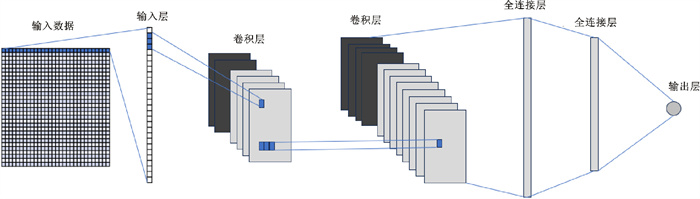
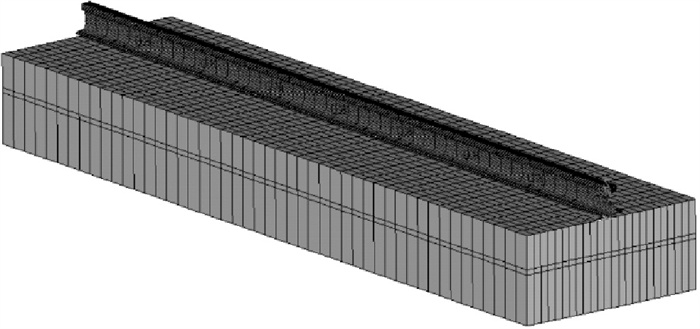
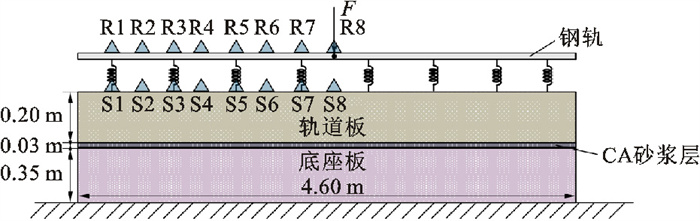
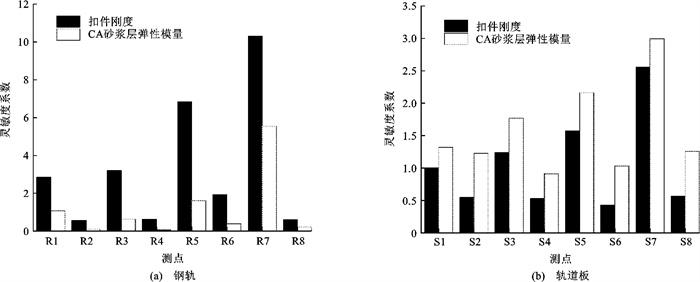
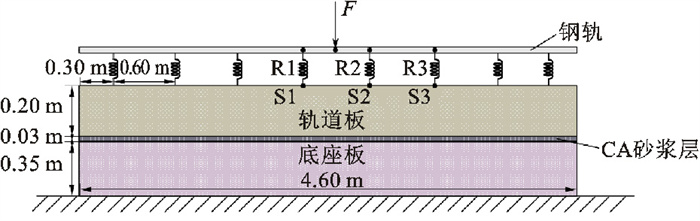
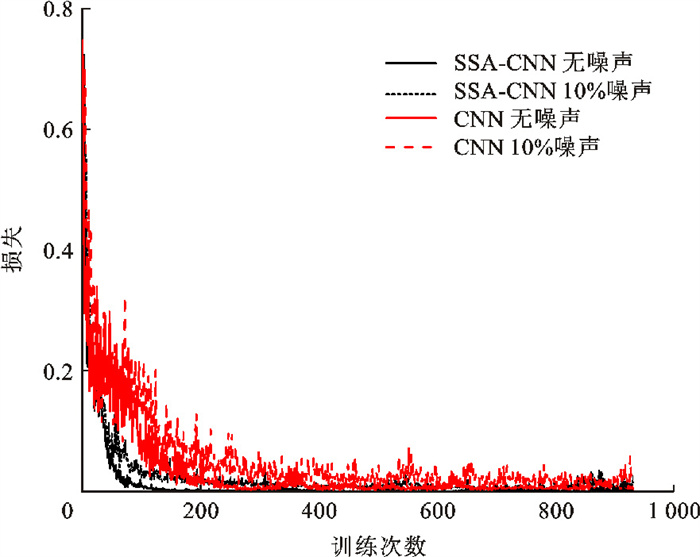
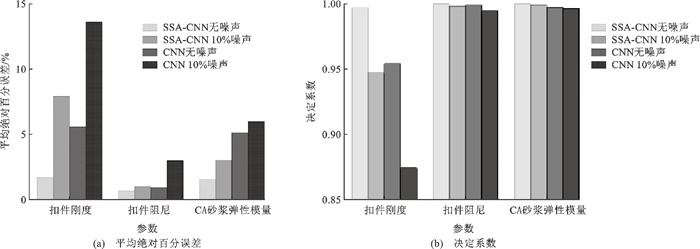
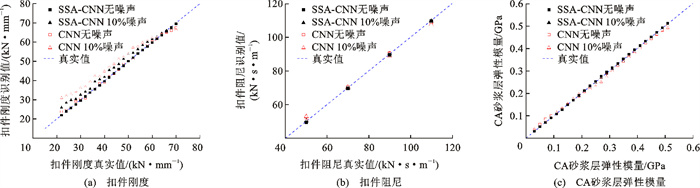
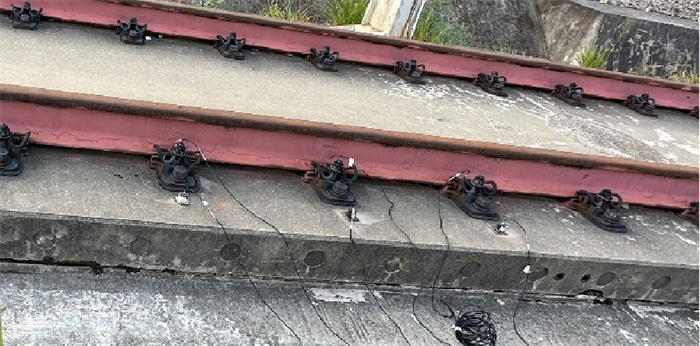
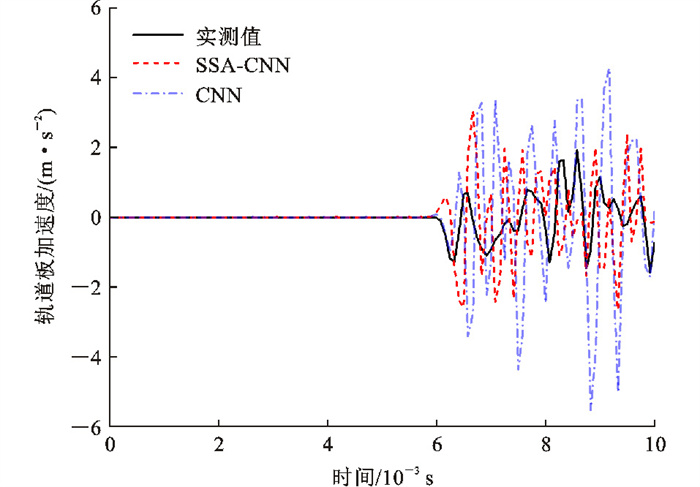
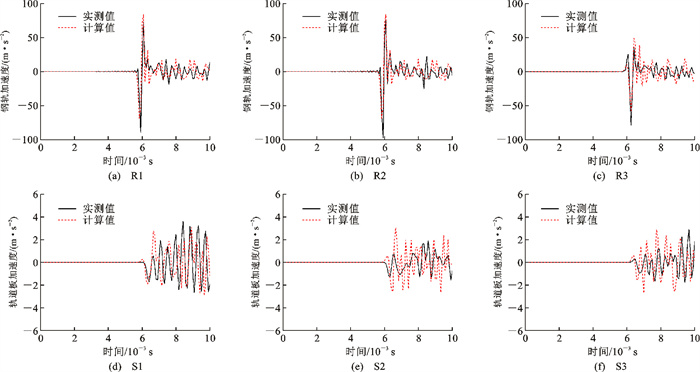
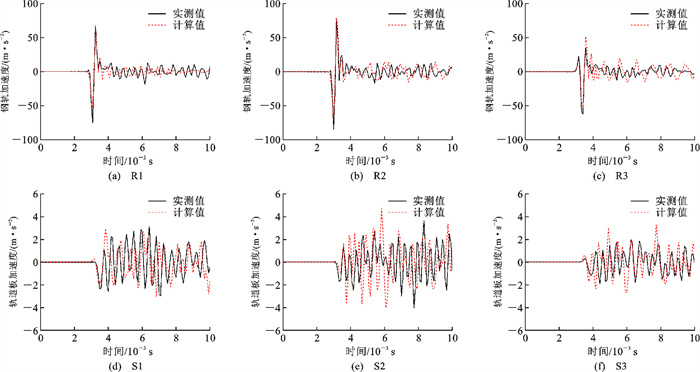
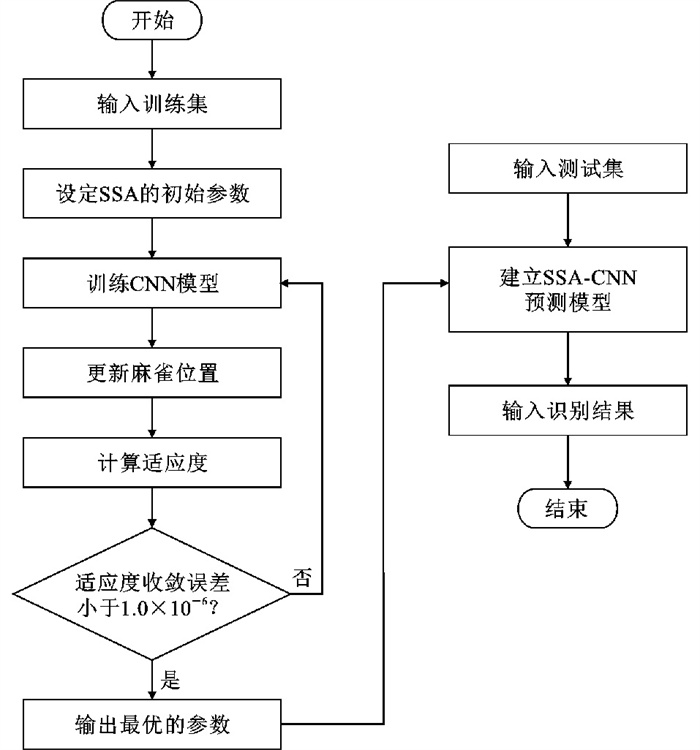
To obtain the in-situ structural parameters of ballastless track in service, a structural parameter identification method was developed by combining the finite element model of ballastless track with the data-driven sparrow search algorithm (SSA)-convolutional neural network (CNN). The finite element model of the ballastless track was established, and frequency response functions (FRFs) under different parameters were calculated within the given parameter space to form a dataset. 70% of the data was taken as the training set, and the remaining data was used as the test set. By using the FRFs of the training set as inputs and track's structural parameters as outputs, the SSA-CNN parameter identification model was trained and verified by the test set. A hammer test on the ballastless track was carried out, and the measured FRFs were input into the parameter identification model to obtain fastener stiffness, damping, and the elastic modulus of CA mortar. The identified parameter values were substituted into the track's finite element model to calculate the vibration response under the same excitation. The calculated results were in good agreement with the test results. Research results show that when the parameter identification model is trained with a dataset containing 10% Gaussian noise, the average absolute percentage errors for identifying fastener stiffness, damping, and the elastic modulus of CA mortar are 7.90%, 1.00%, and 3.03%, respectively, verifying the reliability of the parameter identification model. The track's structural parameters can be captured accurately using the parameter identification method in this paper and the hammer test data. The vibration response of the rail is beneficial to identifying parameters or damage of fastener, while the vibration data of the slab is suitable for identifying the elastic modulus or delamination of the CA mortar layer. The developed parameter identification method for ballastless track is an effective analytical tool for detecting and assessing the service performance of interlayer connection components in ballastless tracks.

| [1] |
XU J M, WANG P, AN B Y, et al. Damage detection of ballastless railway tracks by the impact-echo method[J]. Proceedings of the Institution of Civil Engineers-Transport, 2018, 171(2): 106-114. doi: 10.1680/jtran.16.00146
|
| [2] |
CHUDZIKIEWICZ A, BOGACZ R, KOSTRZEWSKI M, et al. Condition monitoring of railway track systems by using acceleration signals on wheelset axle-boxes[J]. Transport, 2018, 33(2): 555-566.
|
| [3] |
CANTERO D, BASU B. Railway infrastructure damage detection using wavelet transformed acceleration response of traversing vehicle[J]. Structural Control and Health Monitoring, 2015, 22(1): 62-70. doi: 10.1002/stc.1660
|
| [4] |
MIAO Bing-rong, LIU Jun-li, ZHANG Ying, et al. Review on structural vibration damage identification technology for railway vehicles[J]. Journal of Traffic and Transportation Engineering, 2021, 21(1): 338-357. doi: 10.19818/j.cnki.1671-1637.2021.01.016
|
| [5] |
HOELZL C, DERTIMANIS V, ANCU L, et al. Vold-Kalman filter order tracking of axle box accelerations for track stiffness assessment[J]. Mechanical Systems and Signal Processing, 2023, 204: 110817. doi: 10.1016/j.ymssp.2023.110817
|
| [6] |
BERGGREN E G, KAYNIA A M, DEHLBOM B. Identification of substructure properties of railway tracks by dynamic stiffness measurements and simulations[J]. Journal of Sound and Vibration, 2010, 329(19): 3999-4016. doi: 10.1016/j.jsv.2010.04.015
|
| [7] |
KAEWUNRUEN S, REMENNIKOV A M. Field trials for dynamic characteristics of railway track and its components using impact excitation technique[J]. NDT & E International, 2007, 40(7): 510-519.
|
| [8] |
OREGUI M, LI Z L, DOLLEVOET R. An investigation into the vertical dynamics of tracks with monoblock sleepers with a 3D finite-element model[J]. Proceedings of the Institution of Mechanical Engineers, Part F: Journal of Rail and Rapid Transit, 2016, 230(3): 891-908. doi: 10.1177/0954409715569558
|
| [9] |
LI Q, THOMPSON D J, TOWARD M G. Estimation of track parameters and wheel-rail combined roughness from rail vibration[J]. Proceedings of the Institution of Mechanical Engineers, Part F: Journal of Rail and Rapid Transit, 2018, 232(4): 1149-1167. doi: 10.1177/0954409717710126
|
| [10] |
SHEN C, DOLLEVOET R, LI Z L. Fast and robust identification of railway track stiffness from simple field measurement[J]. Mechanical Systems and Signal Processing, 2021, 152: 107431. doi: 10.1016/j.ymssp.2020.107431
|
| [11] |
LAM H F, ALABI S A, YANG J H. Identification of rail-sleeper-ballast system through time-domain Markov chain Monte Carlo-based Bayesian approach[J]. Engineering Structures, 2017, 140: 421-436. doi: 10.1016/j.engstruct.2017.03.001
|
| [12] |
LE PEN L, MILNE D, THOMPSON D, et al. Evaluating railway track support stiffness from trackside measurements in the absence of wheel load data[J]. Canadian Geotechnical Journal, 2016, 53(7): 1156-1166. doi: 10.1139/cgj-2015-0268
|
| [13] |
SHEN C, ZHANG P, DOLLEVOET R, et al. Evaluating railway track stiffness using axle box accelerations: A digital twin approach[J]. Mechanical Systems and Signal Processing, 2023, 204: 110730. doi: 10.1016/j.ymssp.2023.110730
|
| [14] |
HU Jun-liang, YU Xiao-lin, ZHENG Heng-bin, et al. Finite element model updating of beam structures based on the optimized BP neural network[J]. Journal of South China University of Technology (Natural Science Edition), 2013, 41(8): 67-73.
|
| [15] |
WAN Zhou, LIU Jing-ze, ZHANG Da-hai, et al. Identification method for support stiffness of whole aero-engine based on LSTM[J]. Journal of Southeast University (Natural Science Edition), 2021, 51(4): 672-678.
|
| [16] |
ZHANG X J, DENG Z M, ZHAO Y L. A frequency response model updating method based on unidirectional convolutional neural network[J]. Mechanics of Advanced Materials and Structures, 2021, 28(14): 1480-1487. doi: 10.1080/15376494.2019.1681037
|
| [17] |
MO Ye, WANG Zuo-cai, DING Ya-jie et al. Parametric recognition of nonlinear structural model based on VMD and DBN[J]. Journal of Vibration and Shock, 2022, 41(9): 136-143.
|
| [18] |
ZHANG Y Q, MIYAMORI Y, MIKAMI S, et al. Vibration-based structural state identification by a 1-dimensional convolutional neural network[J]. Computer-Aided Civil and Infrastructure Engineering, 2019, 34(9): 822-839. doi: 10.1111/mice.12447
|
| [19] |
MIAO R, GAO Y T, GE L, et al. Online defect recognition of narrow overlap weld based on two-stage recognition model combining continuous wavelet transform and convolutional neural network[J]. Computers in Industry, 2019, 112: 103115. doi: 10.1016/j.compind.2019.07.005
|
| [20] |
CHEN D H, ZHANG Y S, WAN R Z, et al. Indirect identification of bridge damage based on coupled vehicle-bridge vibration and 2D-CNN[J]. Measurement Science and Technology, 2024, 35(5): 055019. doi: 10.1088/1361-6501/ad2ad5
|
| [21] |
AZIMI M, PEKCAN G. Structural health monitoring using extremely compressed data through deep learning[J]. Computer-Aided Civil and Infrastructure Engineering, 2020, 35(6): 597-614. doi: 10.1111/mice.12517
|
| [22] |
TONDO G R, RAU S, KAVRAKOV L, et al. Stochastic stiffness identification and response estimation of Timoshenko beams via physics-informed Gaussian processes[J]. Probabilistic Engineering Mechanics, 2023, 74: 103534. doi: 10.1016/j.probengmech.2023.103534
|
| [23] |
LIANG R H, LIU W F, FU Y G, et al. Physics-informed deep learning for structural dynamics under moving load[J]. International Journal of Mechanical Sciences, 2024, 284: 109766. doi: 10.1016/j.ijmecsci.2024.109766
|
| [24] |
KRICHEN M. Convolutional neural networks: A survey[J]. Computers, 2023, 12(8): 151. doi: 10.3390/computers12080151
|
| [25] |
XUE J K, SHEN B. A survey on sparrow search algorithms and their applications[J]. International Journal of Systems Science, 2024, 55(4): 814-832. doi: 10.1080/00207721.2023.2293687
|
| [26] |
REN Juan-juan, ZHAO Hua-wei, LI Xiao, et al. Analysis of harmonic response of CRTS Ⅲ prefabricated slab track with anti-vibration structure[J]. Journal of Railway Engineering Society, 2016, 33(3): 44-50.
|
| [27] |
CUI Xiao-lu, YIN Yue, BAO Peng-yu, et al. Effect of the structure and parameter of brake/track on rail corrugation in a mountain city metro[J]. Surface Technology, 2023, 52(1): 103-111.
|
| [28] |
WEI Kai, WANG Feng, ZHAO Ze-ming, et al. The methodology research on the test and evaluation of static stiffness of elastic pads in elastic separated fastener[J]. Journal of Railway Engineering Society, 2018, 35(11): 32-36, 86.
|
Copyright《Journal of Traffic and Transportation Engineering》编辑部陕ICP备05001904号-1
Address :Editorial Department of Journal of Traffic and Transportation Engineering, Chang'an University, Middle Section of South 2nd Ring Road, Xi'an, China(710064) Tel:029-82334388 Email:jygc@chd.edu.cn
All visit:Today's visit:
Supported by:
Beijing Renhe Information Technology Co. Ltd




 DownLoad: