| Citation: | HE Qing, LI Zong-lin, WANG Xiao-guang, LI Fei. Optimization of heat transfer in electric heating snow melting systems for turnout[J]. Journal of Traffic and Transportation Engineering, 2025, 25(6): 23-35. doi: 10.19818/j.cnki.1671-1637.2025.06.003

|
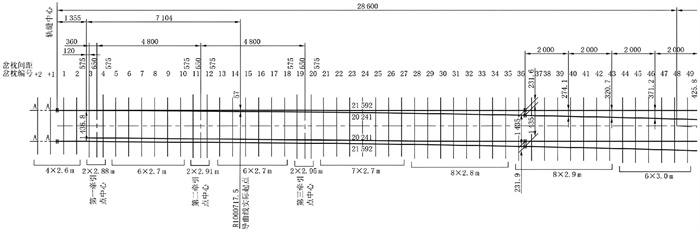
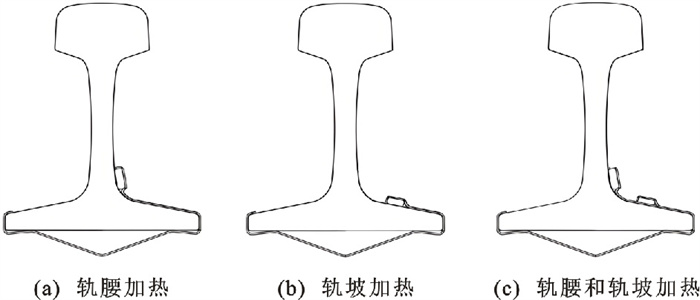
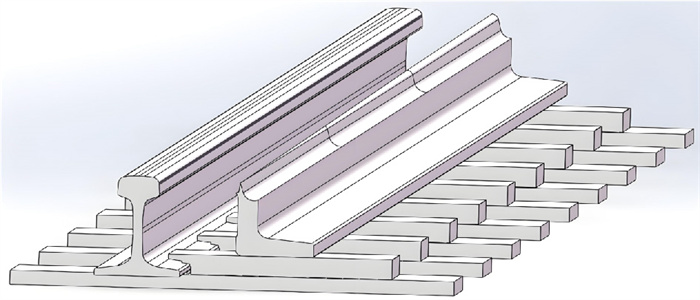
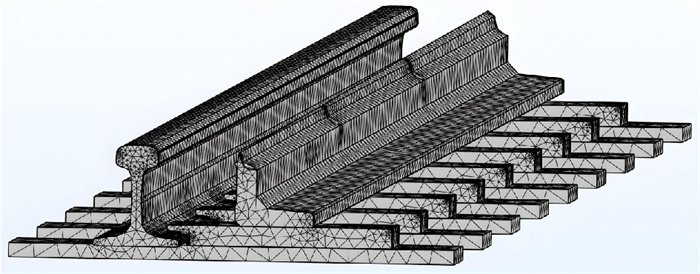
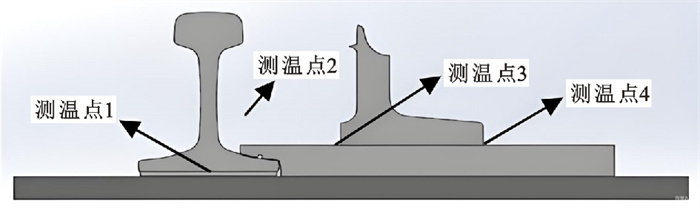
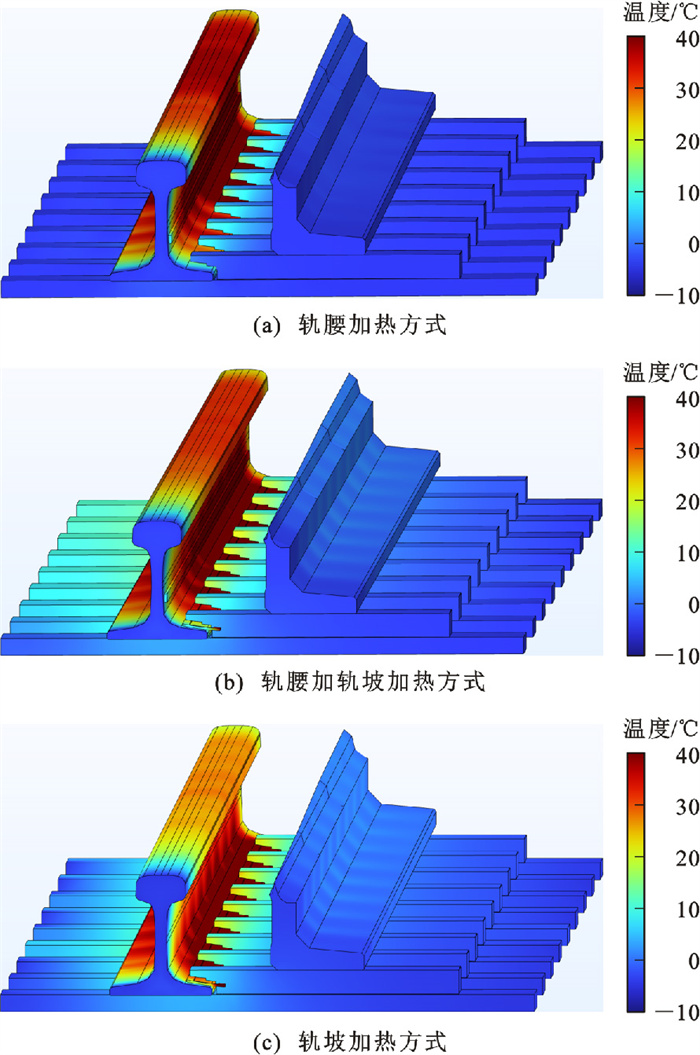
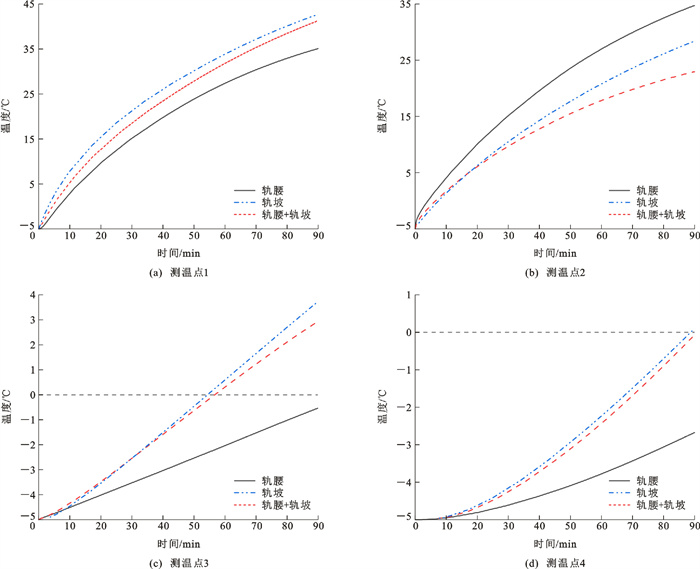
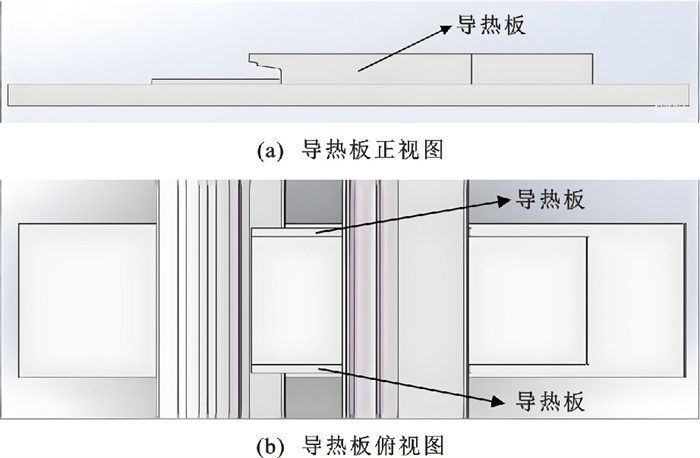
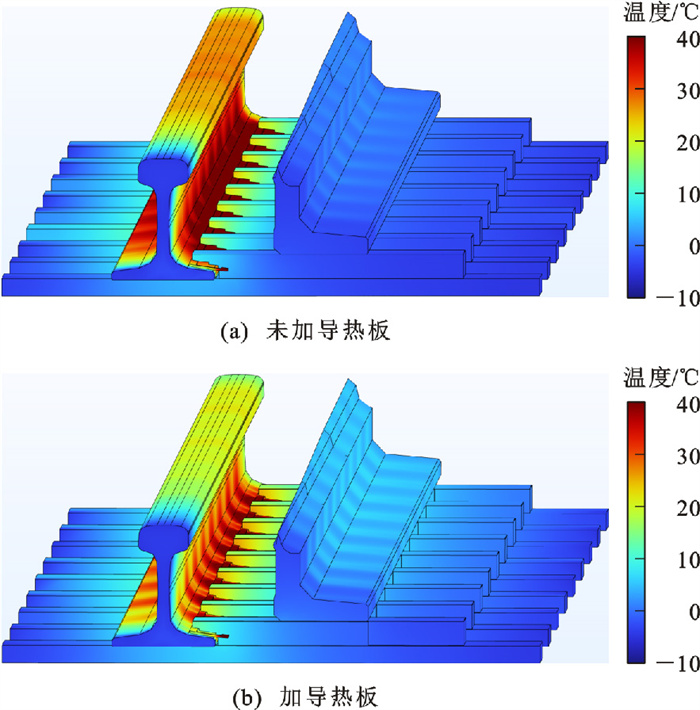
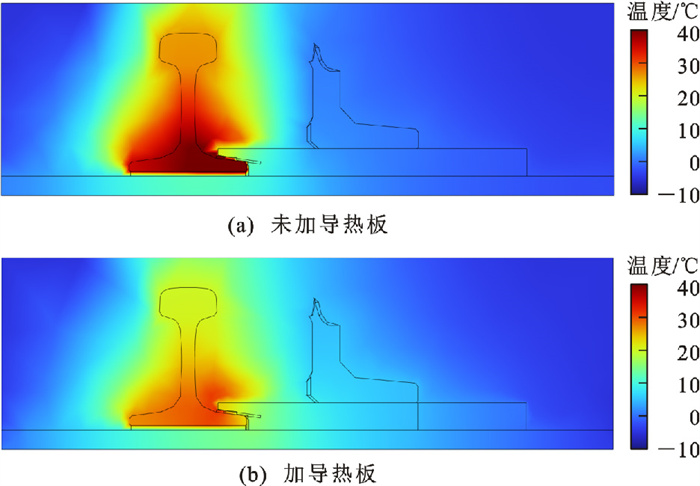
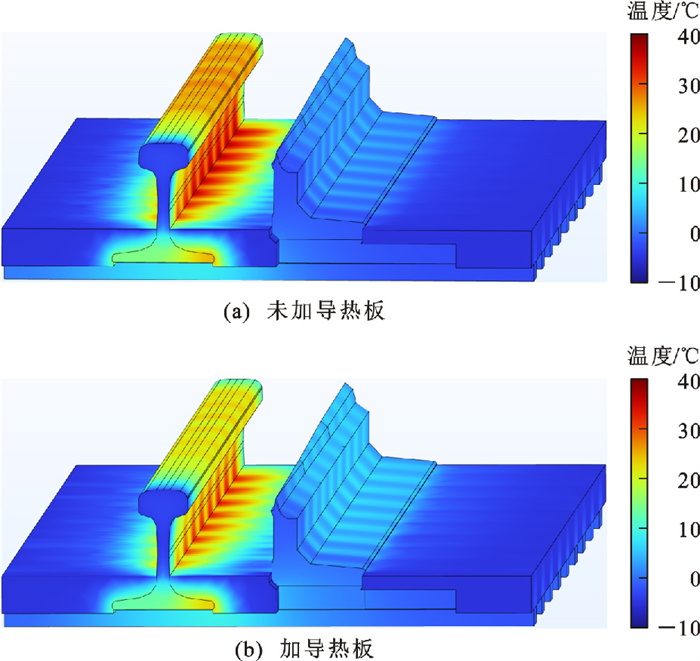
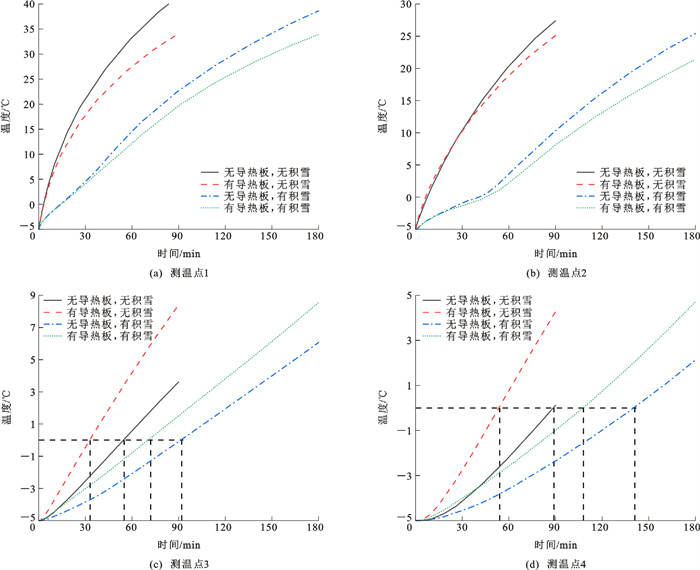
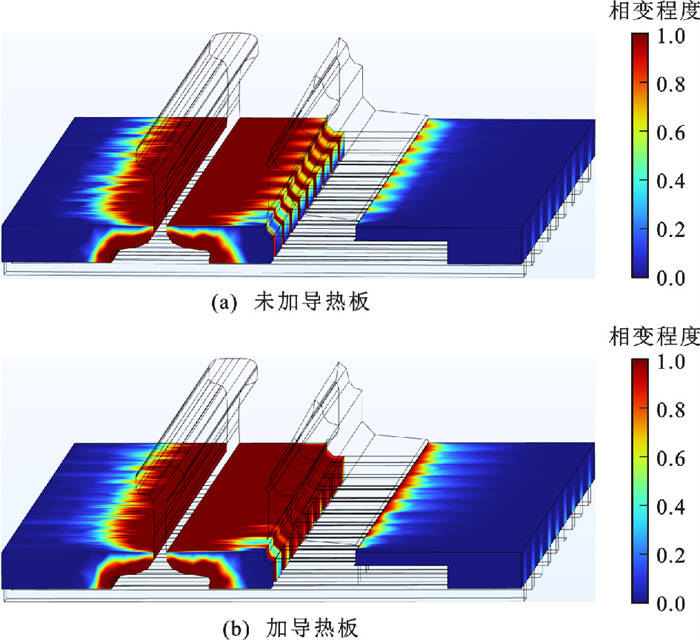
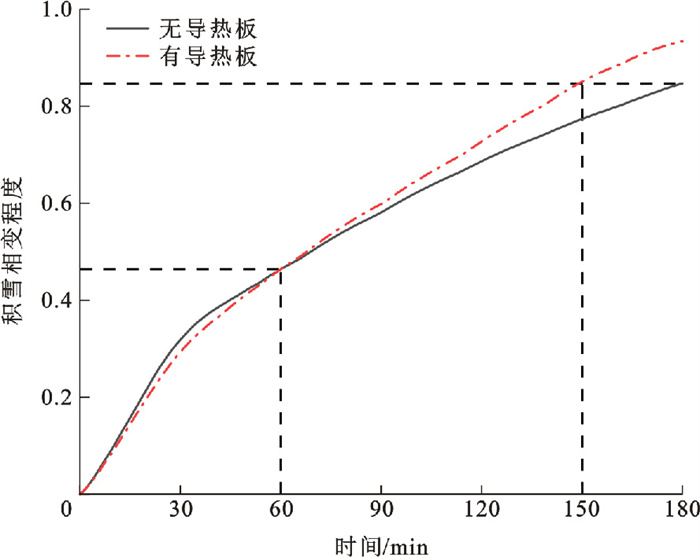
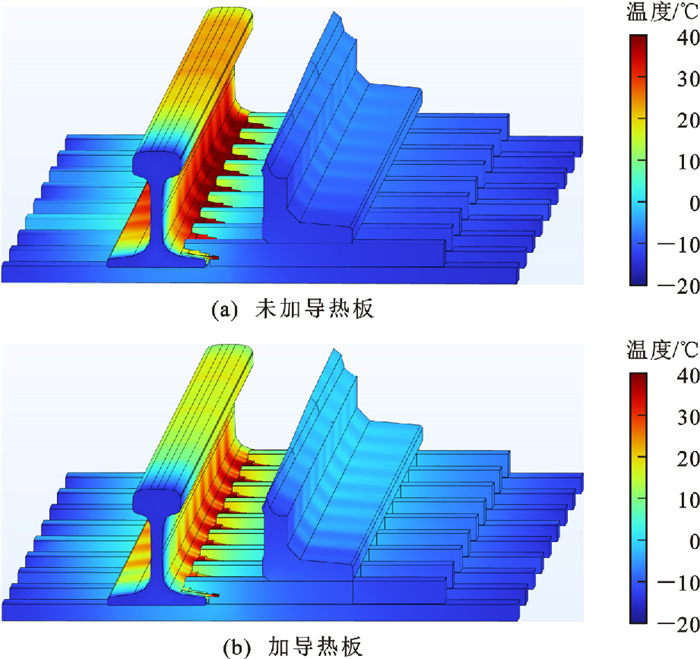
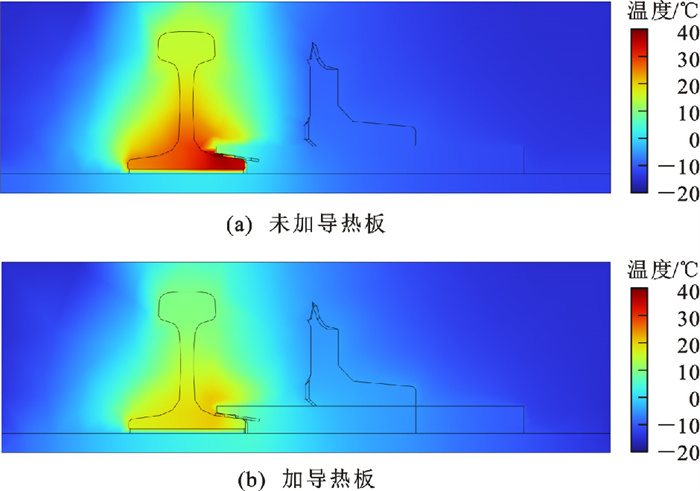
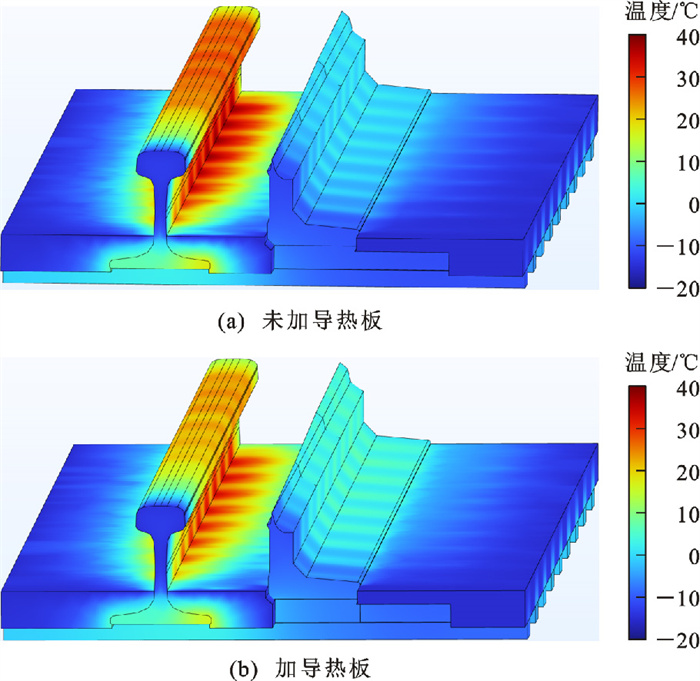
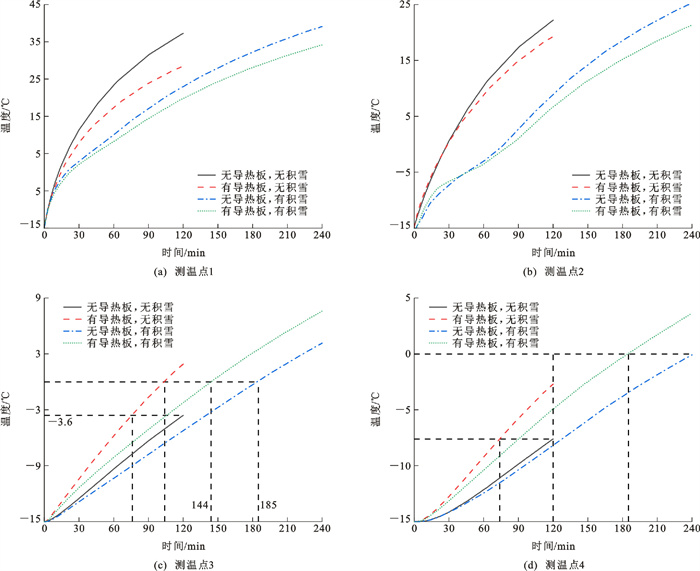
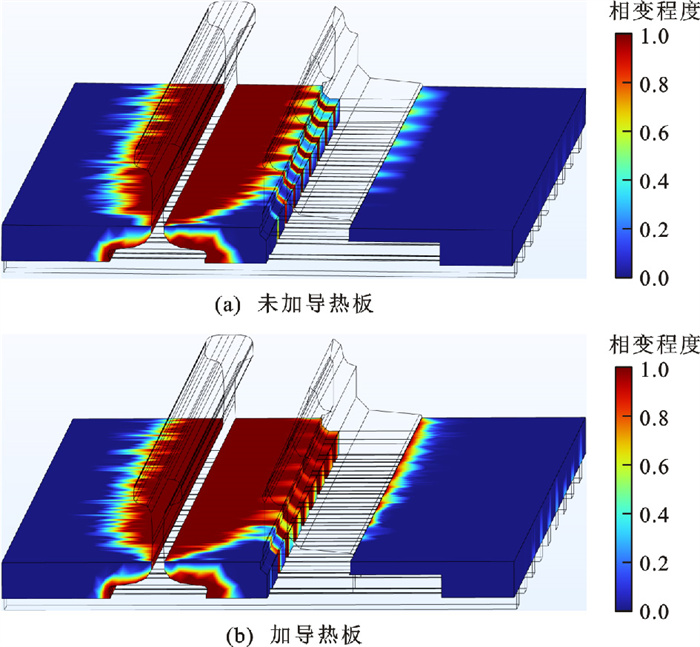
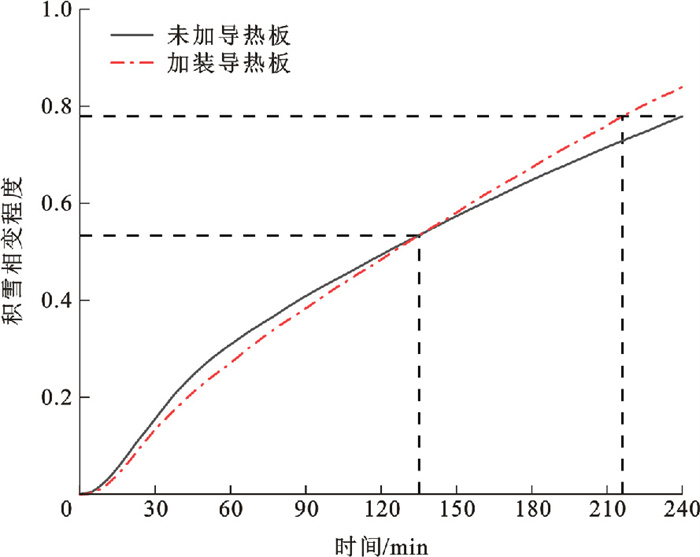
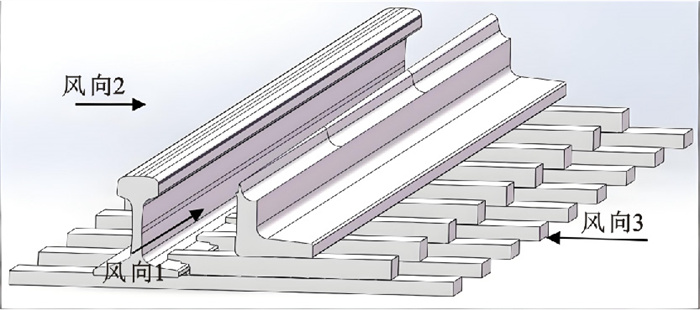
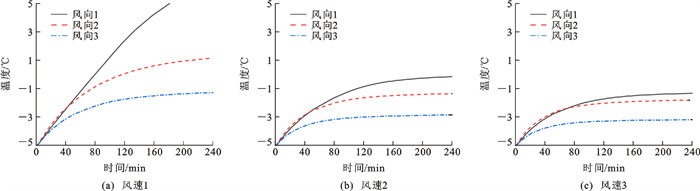
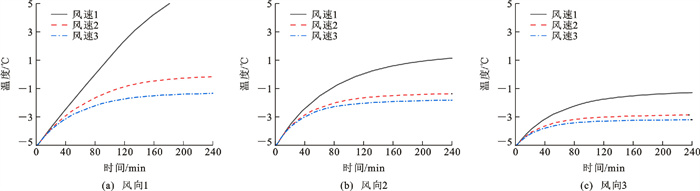
To address the issues of high energy consumption, low thermal efficiency, and incomplete snow melting in electric heating elements of turnout, No. 18 turnout of a 60 kg·m-1 steel rail was selected as the research subject. Based on finite element analysis and physical field analysis methods of solid-fluid heat transfer, a physical model of "turnout-heating element-snow accumulation-air" was constructed. The model surface was defined as an open boundary, with the bottom defined as thermally insulated. Under identical initial conditions, the simulation results of heating methods of rail web, rail slope, and combined rail web and slope heating were compared. An optimized method involving the installation of heat-conducting plates on the sides of the slide bed was proposed. Simulation analyses were conducted under varying temperatures, wind speeds, and directions. Analysis results show that, under constant total power, a more pronounced rise in the slide bed temperature is observed when the rail slope heating method is employed, as compared with the other two heating methods. After installing heat-conducting plates, heat generated by the heating element transfers faster to the sliding bed due to their higher thermal response speed. Under the temperatures of -5 ℃ and -15 ℃ and in the absence of snow accumulation, the time required for the heating element to reach the corresponding temperature is shortened by 40% when a heat-conducting plate is used, compared with the general condition without such a plate. With an additional 20 mm of snow accumulation, a lead time of over 20% is achieved compared with the general condition. Snow-melting rate at the near end of the stock rail is initially lower than under general conditions. Later, the rate increases. As a result, the snow at the far end melts faster and more completely. Different wind directions act on different positions of the turnout and produce different effects in suppressing temperature rise. Higher wind speed makes the temperature rise more slowly. It also causes the system to reach a balance between heat absorption and heat loss more quickly. The established heat transfer model of the heat-conducting plate in the switch rail provides a theoretical basis for power optimization in different regions. It can also guide the selection of heating element power and the precise control of heating time.

| [1] |
SZYCHTA E, SZYCHTA L. Comparative analysis of effec-tiveness of resistance and induction turnout heating[J]. Energies, 2020, 13(20): 5262. doi: 10.3390/en13205262
|
| [2] |
SZYCHTA E, SZYCHTA L. Testing of turnout resistance and induction heating in climatic chamber[C]//IEEE. 2021 IEEE 19th International Power Electronics and Motion Control Conference (PEMC). New York: IEEE, 2021: 629-634.
|
| [3] |
OH H S, LEE J, LEE S H, et al. Parasitic capacitance analysis of PCB-type induction heating coil and LCCC/S matching network design for railway turnouts[J]. Journal of Electrical Engineering & Technology, 2023, 18(4): 3311-3320.
|
| [4] |
OH H S, KIM D K, HONG S M, et al. Anti-icing system on railway turnouts using induction heating technology for energy saving[C]//IEEE. 2022 IEEE 21st Mediterranean Electrotechnical Conference (MELECON). New York: IEEE, 2022: 342-347.
|
| [5] |
FLIS M. Energy efficiency analysis of railway turnout heating system with a melting snow model heated by classic and contactless heating method[J]. Archives of Electrical Engineering, 2019, 68(3): 511-520.
|
| [6] |
FLIS M. Contactless turnouts' heating for energy consumption optimization[J]. Archives of Electrical Engineering, 2020, 69(1): 133-145.
|
| [7] |
BRODOWSKI D, FLIS M. Experimental verification of contactless heating method in railway turnouts heating system[J]. Problemy Kolejnictwa-Railway Reports, 2022, 66(194): 73-79. doi: 10.36137/1941E
|
| [8] |
CHEN Xin. Discussion on heating power configuration scheme of electric heating switch snow-melting system[J]. Railway Signalling & Communication Engineering, 2019, 16(1): 14-17.
|
| [9] |
DING Shan-feng, MAN Kai-quan, WANG Ting-ting. Influence and countermeasures of snow and ice weather on switch equipment of high-speed railway[J]. Railway Signalling & Communication Engineering, 2020, 17(10): 76-79, 82.
|
| [10] |
NORDLUND E. Inductive railway switch point heating: Improved control algorithm and phase compensation analysis for an inductive turnout heating system, and comparison with a resistive heating system[D]. Eskilstuna: Mälardalen University, 2023.
|
| [11] |
WANG S, SUN G, LI Y, et al. A study on electromagnetic inductive heating unit for railway turnout[C]//Springer. Developments and Applications in SmartRail, Traffic, and Transportation Engineering. Berlin: Springer, 2024: 509-517.
|
| [12] |
HONG S Y, KIM D K, OH H S, et al. Development of PFC converter for induction heating system in railway[C]//IEEE. 2022 25th International Conference on Electrical Machines and Systems (ICEMS). New York: IEEE, 2022: 1-4.
|
| [13] |
YU Guan-hua, WEI Xu-chu. scheme of intelligent point heating system for Zhangjiajie-Jishou-Huaihua High Speed Railway[J]. Railway Signalling & Communication Engi-neering, 2022, 19(2): 15-17, 34.
|
| [14] |
QIU Zhan-guo, AN Yan, YANG Jun, et al. Discussion on energy-saving control scheme of equipment for electric point heating system[J]. Railway Signalling & Communication, 2022, 58(9): 46-49.
|
| [15] |
QIU Zhan-guo. Intelligent control of electric heating switch snowmelt system[J]. Railway Signalling & Communication, 2022, 58(2): 15-18.
|
| [16] |
WANG Song. Research on intelligent control scheme of snow melting devices for turnouts[J]. Railway Engineering Technology and Economy, 2023, 38(5): 27-30.
|
| [17] |
HUANG Yi-rui. Analysis and optimisation of electrically heated turnout snow melting system based on filtering algorithm[D]. Dalian: Dalian Jiaotong University, 2020.
|
| [18] |
ZHAO Kang-xiao. Optimisation of electric heating element configuration for turnout snow melting system based on COMSOL[D]. Lanzhou: Lanzhou Jiaotong University, 2023.
|
| [19] |
AN Yan. Research on improving the thermal efficiency of equipment for electric point heating system[J]. Railway Signalling & Communication, 2024, 60(2): 88-94.
|
| [20] |
YUAN Yu-qing, ZHANG Yong-jian, YU Xu-can. Experi-ments on heating and warming of carbon fibers ropes embedded in asphalt concrete[J]. Journal of Chang'an University (Natural Science Edition), 2015, 35(1): 49-55.
|
| [21] |
SONG Shi-de, ZHOU Wei-jie. Numerical simulation on electrothermal properties of geogrid reinforced asphalt concrete[J]. Journal of Railway Science and Engineering, 2016, 13(8): 1515-1521.
|
| [22] |
VAJDI M, SADEGH MOGHANLOU F, SHARIFIANJAZI F, et al. A review on the Comsol Multiphysics studies of heat transfer in advanced ceramics[J]. Journal of Composites and Compounds, 2019, 2(1): 35-44.
|
| [23] |
ZENG Shu, YAN Zhen-guo, ZHANG Zheng-wei, et al. Research of novelty airport runways snow-melting system based on shallow geothermal hydronic heating technology[J]. Acta Energiae Solaris Sinica, 2022, 43(11): 376-382.
|
| [24] |
HU T F, ZHAO L Q, WANG T F, et al. Field evaluation of a novel thermally controlled subgrade for mitigating frost heave[J]. International Journal of Rail Transportation, 2025, 13(6): 1114-1134. doi: 10.1080/23248378.2024.2443978
|
| [25] |
HUANG C P, TAN J J, GAN S K, et al. Experimental study and numerical simulation of sidewalk electrical heating for deicing and snow melting[J]. International Journal of Pavement Engineering, 2023, 24(2): 2088752. doi: 10.1080/10298436.2022.2088752
|
| [26] |
WANG F, FU C L, LIU K, et al. Experimental study and numerical simulation of concrete pavement electrical heating for snow melting[J]. Construction and Building Materials, 2024, 442: 137611. doi: 10.1016/j.conbuildmat.2024.137611
|
| [27] |
STYPUŁKOWSKI K, KUKULSKI J. The use of thermal imaging studies in the diagnosis of railroad infrastructure elements[J]. Pojazdy Szynowe, 2023(3/4): 40-46.
|
| [28] |
ZHOU L, DING L, YI X. A review of snow melting and de-icing technologies for trains[J]. Proceedings of the Institution of Mechanical Engineers, Part F: Journal of Rail and Rapid Transit, 2022, 236(8): 877-886. doi: 10.1177/09544097211059631
|
| [29] |
ZHOU Qing-yue, ZHANG Yin-hua, LIU Feng-shou, et al. Study on selection of rail material and strength level for HSR turnout[J]. China Railway, 2017(8): 5-9.
|
| [30] |
HE Q, ZHAO K X, DU Y F. Frontier research: Road and traffic engineering[M]. London: CRC Press, 2022.
|
| [31] |
HE Qing, ZHAO Kang-xiao. Research on optimization scheme of snowmelt switch based on heat transfer model[J]. Railway Standard Design, 2023, 67(7): 69-74.
|
| [32] |
HE Qing, LI Zong-lin, HUANG Yong, et al. Construction and analysis of heat transfer model for electric heating elements in switch snow melting system[J]. Journal of Railway Science and Engineering, 2025, 22(2): 841-851.
|
Copyright《Journal of Traffic and Transportation Engineering》编辑部陕ICP备05001904号-1
Address :Editorial Department of Journal of Traffic and Transportation Engineering, Chang'an University, Middle Section of South 2nd Ring Road, Xi'an, China(710064) Tel:029-82334388 Email:jygc@chd.edu.cn
All visit:Today's visit:
Supported by:
Beijing Renhe Information Technology Co. Ltd




 DownLoad: