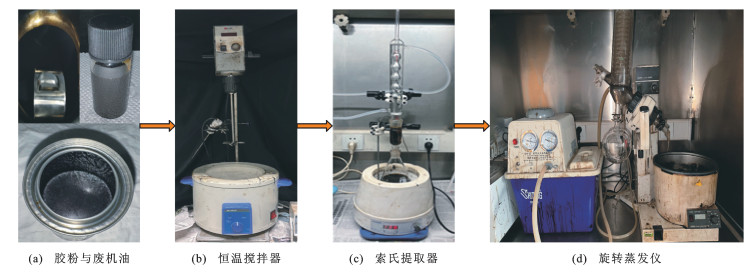
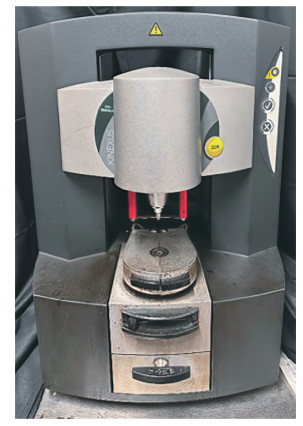
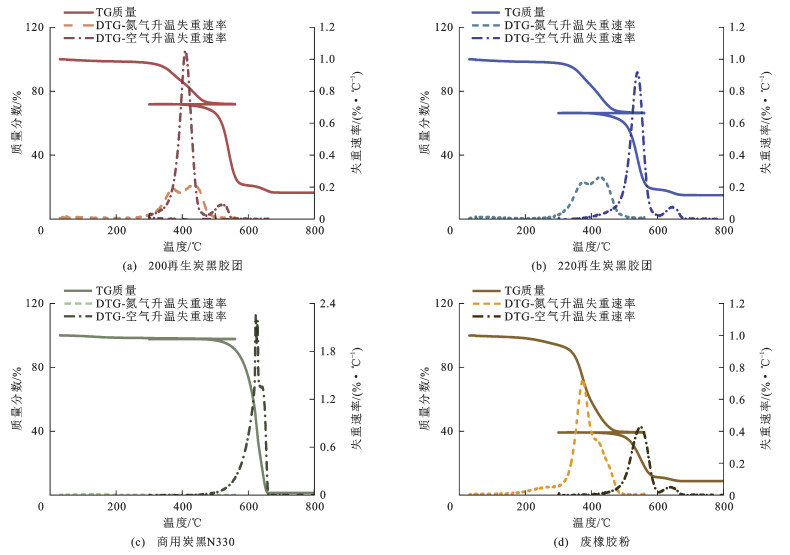
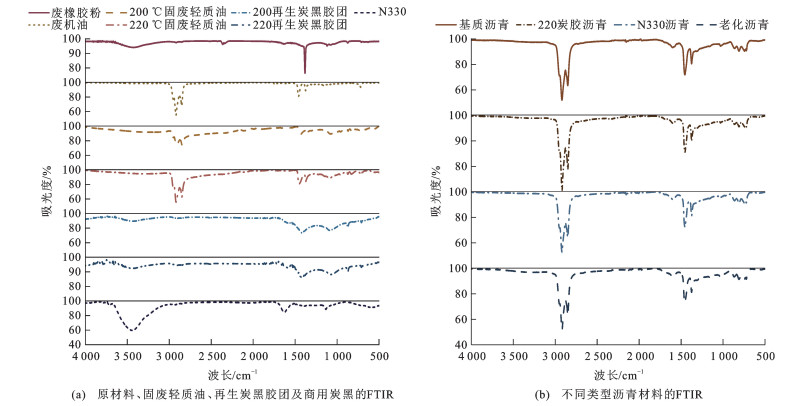
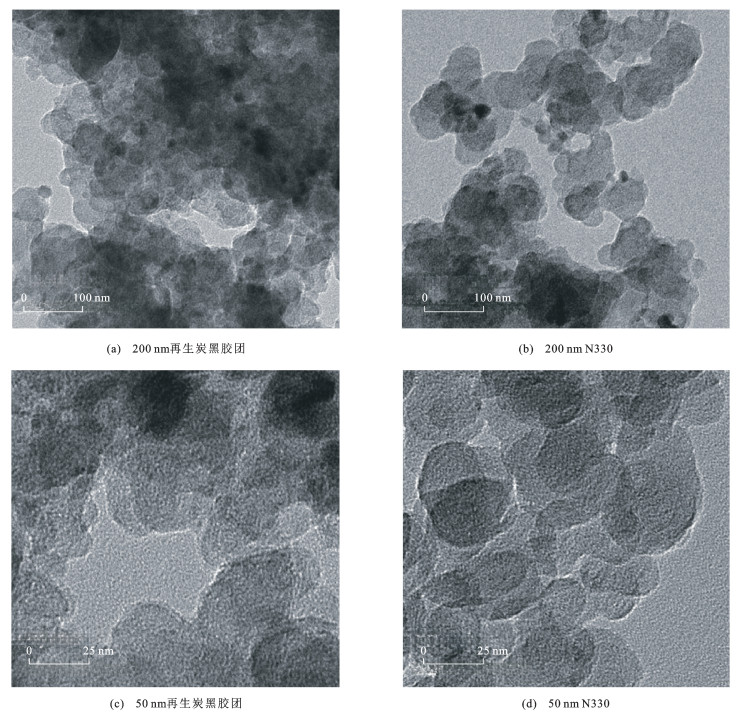
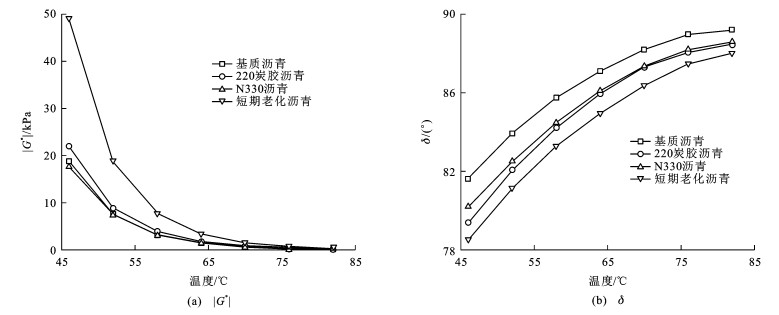
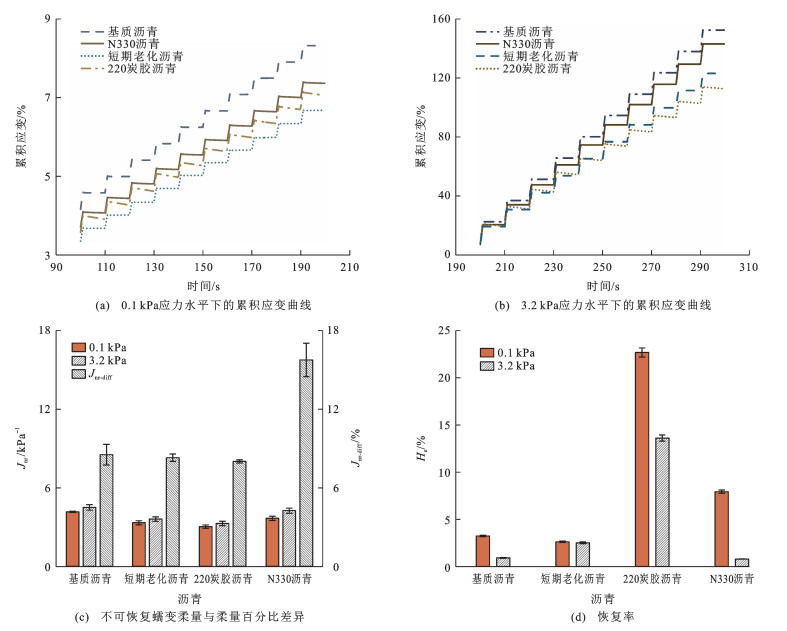
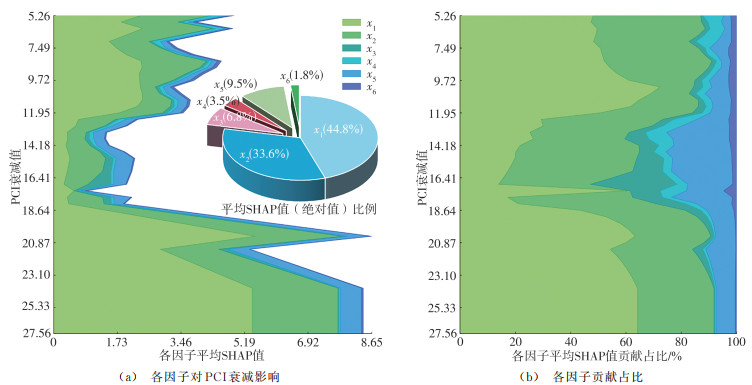
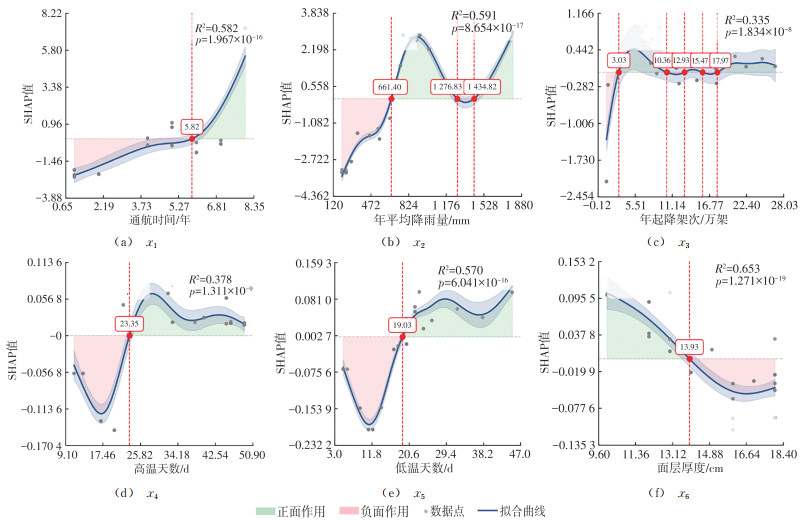
To meet the deformation resistance requirements of airport pavement under high-temperature and heavy-load conditions and to promote the value-added use of solid by-products from waste tire pyrolysis, recycled carbon black clusters were prepared from waste tire rubber pyrolysis residues and used for secondary modification of rejuvenated asphalt. Base asphalt, short-term aged asphalt, and carbon-black-modified rejuvenated asphalt were set as test groups. Thermogravimetry and derivative thermogravimetry were used to obtain information on volatile matter, carbonaceous residue, and ash. Fourier transform infrared spectroscopy and transmission electron microscopy were used to analyze the surface functional groups, particle morphology, and aggregation structure of the recycled carbon black clusters. Dynamic shear rheometry and multiple stress creep recovery tests were used to evaluate the high-temperature load-bearing stability and rutting resistance of the modified rejuvenated asphalt. Research results indicate that the recycled carbon black clusters consist of a carbonaceous skeleton, a residual organic phase, and inorganic components and can form a skeletal network in the asphalt matrix through interfacial interactions and particle bridging. With increasing treatment intensity, the cluster structure becomes more homogeneous and compact, and the inorganic residue shows a filler-like reinforcing effect. Rheological tests show that at 45 ℃-64 ℃, the rejuvenated asphalt modified with clusters treated at 220 ℃ exhibits a higher modulus and a lower phase angle than most comparison groups, indicating simultaneous improvements in elastic response and deformation resistance. At stress levels of 0.1 and 3.2 kPa, its non-recoverable creep compliances are 3.04 and 3.28 kPa-1, respectively, this asphalt recovery rates are 22.67% and 13.60%, respectively, indicating low stress sensitivity. These results suggest that the improved high-temperature performance is mainly associated with the constraint imposed by the structural network, which enables the material to remain stable under cyclic heavy-load conditions. The proposed structural modification strategy based on pyrolysis-derived solid residues can provide theoretical support and an application basis for improving the high-temperature stability of heavy-duty pavement.
More>